Watch Series Online

Tim Curry’s Cause of Death Revealed: The Rocky Horror Legend Was 80
Table of Contents
A Theatrical Legend Has Left the Building
Tim Curry didn’t just play villains. He made them unforgettable. The British actor, singer, and theatrical force whose name became shorthand for flamboyant menace and impeccable comic timing died at his Los Angeles home on August 25, 2026, at the age of 80. A week later, on September 2, his spokesman confirmed what many had been waiting to hear: the cause of death was coronary artery disease, with a history of stroke and kidney cancer listed as significant contributing factors.
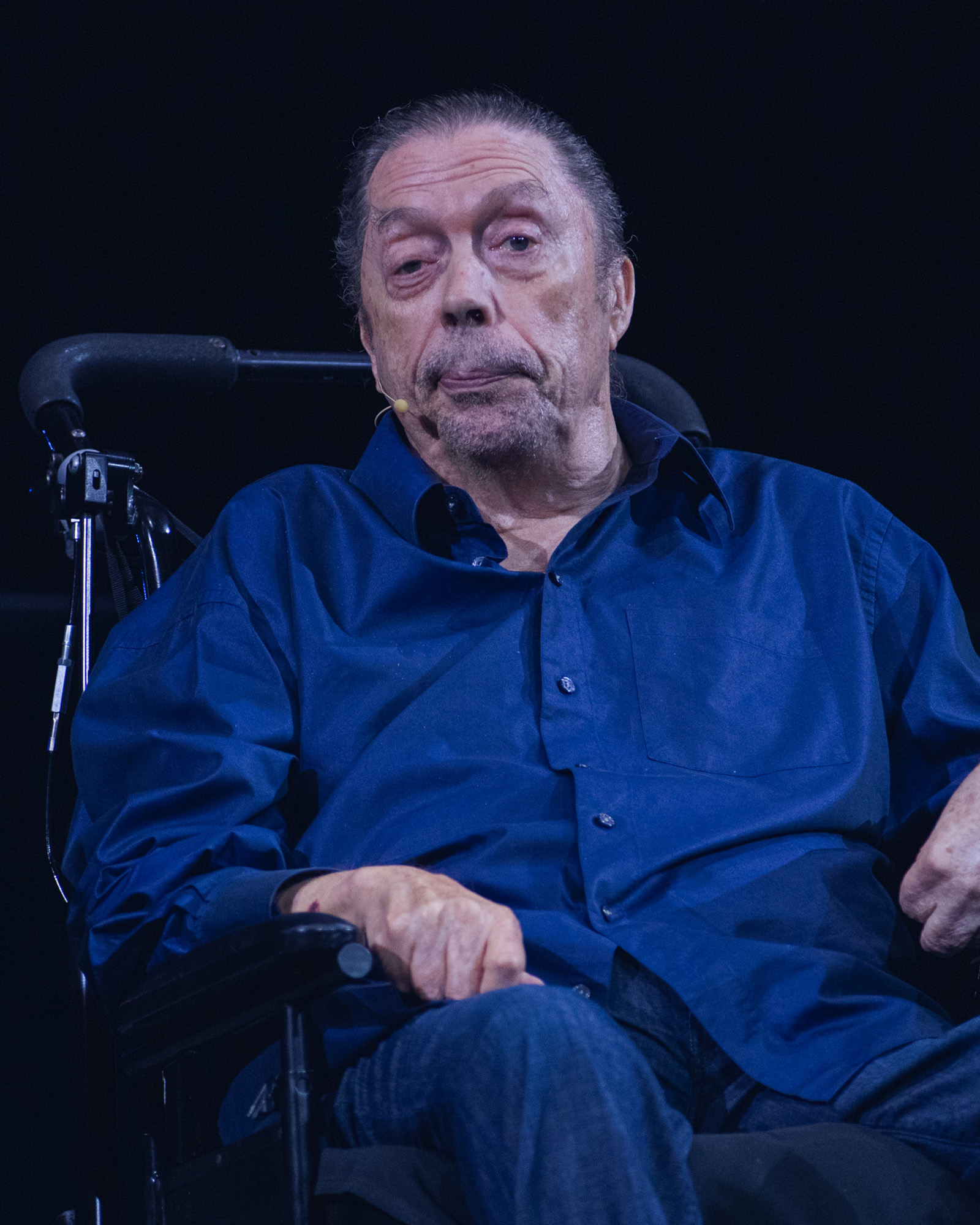

Curry had been transparent about his health challenges for years. In September 2025, at a 50th anniversary screening of The Rocky Horror Picture Show, he spoke openly about his mobility: “I still can’t walk, which is why I’m in this silly chair, and that’s very limiting.” The near-fatal stroke he suffered in 2012 — two blood clots in his brain requiring emergency surgery — left the left side of his body paralyzed and cost him his ability to speak for several weeks. His voice eventually returned after rehabilitation, but he pivoted to voice acting for the remainder of his career, a second act that speaks to the kind of grit that defined his craft.
The Stroke, The Memoir, The Acceptance
Curry documented the fear and the recovery in his 2025 memoir, Vagabond. “I had been very scared when I did not know what was happening to me, because I had no sense of whether tremendous pain was forthcoming,” he wrote. But he arrived at something close to peace. “If death comes for me peacefully and I fade gently from light into dark oblivion, why would I be afraid of it? Sometimes, I rather think it would be a comfort.” Those words — published less than a year before he died — have an eerie, almost theatrical poise to them.
What’s striking about Curry’s final years is what he kept doing despite the paralysis. He didn’t disappear. His last credited role was in the 2024 horror film Stream, and he had already filmed scenes for Stream 2: Sudden Death before his death. Director Michael Leavy confirmed the sequel would be dedicated to Curry — a quiet tribute to an actor who stayed in the game to the end.
The Villain Who Defined a Generation of Scares
You don’t need to be a film buff to know Tim Curry’s face. You just needed to sit through a Halloween screening in the 1980s or catch a midnight showing in the decades since. As Dr. Frank-N-Furter in The Rocky Horror Picture Show (1975), Curry created an archetype that cinema still hasn’t exhausted: the glamorous, transgressive sex god who knows exactly how ridiculous he is and winks at the audience while he destroys lives.
The role could have been a one-hit wonder. Instead, it became a cultural touchtone that outlived its era entirely. Decades later, people still show up in costume. The movie still plays in theaters on select dates. That kind of staying power is rare for any film, let alone a cult phenomenon — and it starts with the performance at the center of it.
But Rocky Horror was never the whole story, and the temptation to reduce Curry to a single iconic turn does him a disservice.
The Shape of a Career: Scares, Laughs, and One Very Memorable Scrooge
Curry’s filmography reads like a map of British and American pop culture from the 1970s through the 2010s. He played the title role in The Muppet Christmas Carol (1992) — a performance that somehow managed to be both genuinely Scrooge-like and warm enough to make the role his own, wrapping Michael Caine’s deadpan straightness in just enough theatrical shading to make the whole thing work. It’s the kind of role that seems like it would be easy and turns out to require exactly the kind of comic range Curry had in spades.
He played Pennywise the Dancing Clown in the 1990 BBC miniseries adaptation of Stephen King’s It — a performance that haunted an entire generation before the 2017 film reimagined the character with Bill Skarsgård’s unsettling physicality. The original Curry version has its own kind of terror: theatrical, verbose, almost playful in the way it lures you in before the horror clicks. A 2022 documentary captured the lasting impact of that miniseries, with Curry himself reflecting on what it meant to play a monster that lodged in so many childhoods.
In Home Alone (1990), he played Old Man Marley — the scary neighbor everyone assumes is a monster, who turns out to be nothing like the rumors. It’s a small role, easily overlooked in a film dominated by Macaulay Culkin’s comic fireworks, but Curry brings a warmth and a weariness to it that lands on a completely different emotional frequency. And in Clue (1985), he gave the scene-stealing performance as Wadsworth the butler in a whodunit so cleverly constructed that it earned a cult following that still gets referenced today.
He could go from the seductive chaos of Dr. Frank-N-Furter to the grumpy warmth of Scrooge and somehow make both feel essential. That’s the mark of a real character actor — the kind who leaves fingerprints on projects that have nothing to do with them, just by being in the room.
The Stage Was Always Home
For all the movie fame, Curry was, at root, a theatrical actor. He studied at the Royal Academy of Dramatic Art and cut his teeth on the British stage before heading to Los Angeles. His performance in the Broadway musical Sherlock Holmes: The Musical earned him a Tony nomination in 1988 — a reminder that his comic timing wasn’t just a screen gift. He knew how to hold a room live, how to work a silence, how to make a gesture land three rows back.
That theatricality is what separated him from otherwise talented character actors. Curry didn’t just play a part; he committed to it with a kind of glorious excess. Whether he was singing, screaming, or delivering a line with a raised eyebrow, he brought the full weight of a performer who understood that entertainment is a transaction with the audience — and he always paid in full.
His career spanned voice acting for the later part of his life, including roles that gave him space to work without the physical demands that his stroke had made impossible. That pivot — from on-screen presence to voice work — says something about the professionalism Curry brought to everything he did. He found a way to keep working when the body wouldn’t cooperate the way it used to.
What the Industry Lost — and What We Keep
The news of Curry’s death rippled outward faster than you’d expect for someone whose biggest hits are decades old. That’s the thing about actors who burrow into the cultural fabric: their absence registers even among people who haven’t thought about them in years. You don’t forget the butler who got away with everything in Clue. You don’t forget the clown who showed up in your nightmares on a BBC Sunday afternoon. You don’t forget the man in fishnets and heels who turned a B-movie into a rite of passage.
Curry’s death marks the end of a particular kind of British theatrical villainy — the kind that was grand, funny, magnetic, and never entirely trustworthy. Modern Hollywood has its own versions of these characters, but Curry essentially wrote the playbook. He made monstrosity look like an art form.
And in a year that has already taken several entertainment icons, Curry’s passing lands as another reminder that the golden age of character actors who could do everything from musical theater to horror to comedy is thinning out. When they’re gone, you don’t just lose their filmography. You lose the template they left behind for the people still trying to figure out how to be that good.
The Streaming Era’s Unlikely Beneficiary
If there’s a strange silver lining to Curry’s late-career pivot to voice work and horror, it’s that streaming platforms have made his older films more accessible than they were at any point in the pre-digital era. The Rocky Horror Picture Show doesn’t need a midnight theater anymore — it’s one click away. It (1990) sits alongside the newer adaptations on platforms that reach audiences who would never have caught the BBC broadcast. And every December, The Muppet Christmas Carol replays somewhere, and millions of viewers under 30 are still getting introduced to a Scrooge they didn’t know Tim Curry played.
Curry’s work has achieved a kind of second life that he probably didn’t envision when he was filming these projects. The man who couldn’t walk in his final years is, in a very literal sense, still moving through living rooms everywhere. That’s not a consolation — it’s just a fact about the strange afterlife of iconic performances in the streaming age.
The sequel to Stream, dedicated to Curry, will be one more reminder when it arrives. But honestly, the real tribute is already playing somewhere right now. It’s always playing somewhere.
Tim Curry was 80. His cause of death was confirmed as coronary artery disease. He is survived by a filmography that runs the gamut from comedy to horror to musicals — and by an audience that kept showing up for all of it.
© Telepisodes [EST 2008 - 2018] Disclaimer | Sitemap | About | Blog | Use of this website constitutes acceptance of Telepisodes' Terms of Service and Privacy Policy.