Watch Series Online

The Odyssey Has Landed — Why Christopher Nolan’s IMAX 70mm Epic Is a Theatrical Event You Can’t Miss
Table of Contents
The Film That Couldn’t Be Made — Until Now
Christopher Nolan has been chasing this movie for years. The director of Interstellar, Inception, and Oppenheimer has long talked about wanting to shoot an entire feature on IMAX 70mm film — a format so physically demanding that most filmmakers use it only for select sequences. With The Odyssey, which opens in theaters worldwide today, he’s done exactly that. It’s the first commercial feature film ever shot completely on IMAX film cameras, and the result is being hailed as a landmark moment in cinematic history.

The film adapts Homer’s ancient epic poem about Odysseus, King of Ithaca, and his perilous ten-year journey home after the Trojan War. It’s a story that’s been told countless times — in literature, in art, in film — but never quite like this. Nolan’s version brings together a staggering ensemble cast: Matt Damon as Odysseus, Anne Hathaway as Penelope, Tom Holland as Telemachus, Zendaya, Robert Pattinson, Charlize Theron, and Lupita Nyong’o, among many others.
Early reactions from the London premiere on July 6 suggest Nolan has delivered something genuinely monumental. Critics have praised the film’s visual ambition — the Cyclops sequence, the Sirens’ call, and the final bow-and-arrow contest are all being singled out as sequences that push the boundaries of what cinema can achieve when you combine IMAX’s enormous film frame with Nolan’s obsessive attention to practical effects and in-camera storytelling, building on techniques he refined in films like Inside Christopher Nolan’s Oppenheimer.
The IMAX 70mm Experience — Why It Matters
Here’s the thing about shooting an entire movie on IMAX 70mm film: almost nowhere can actually project it properly. IMAX hasn’t manufactured a new 70mm film projector in nearly 50 years, according to IMAX CEO Richard Gelfond. The existing fleet of IMAX 70mm projectors is a museum piece — painstakingly maintained by a small group of technicians who know how to keep the aging machines running.
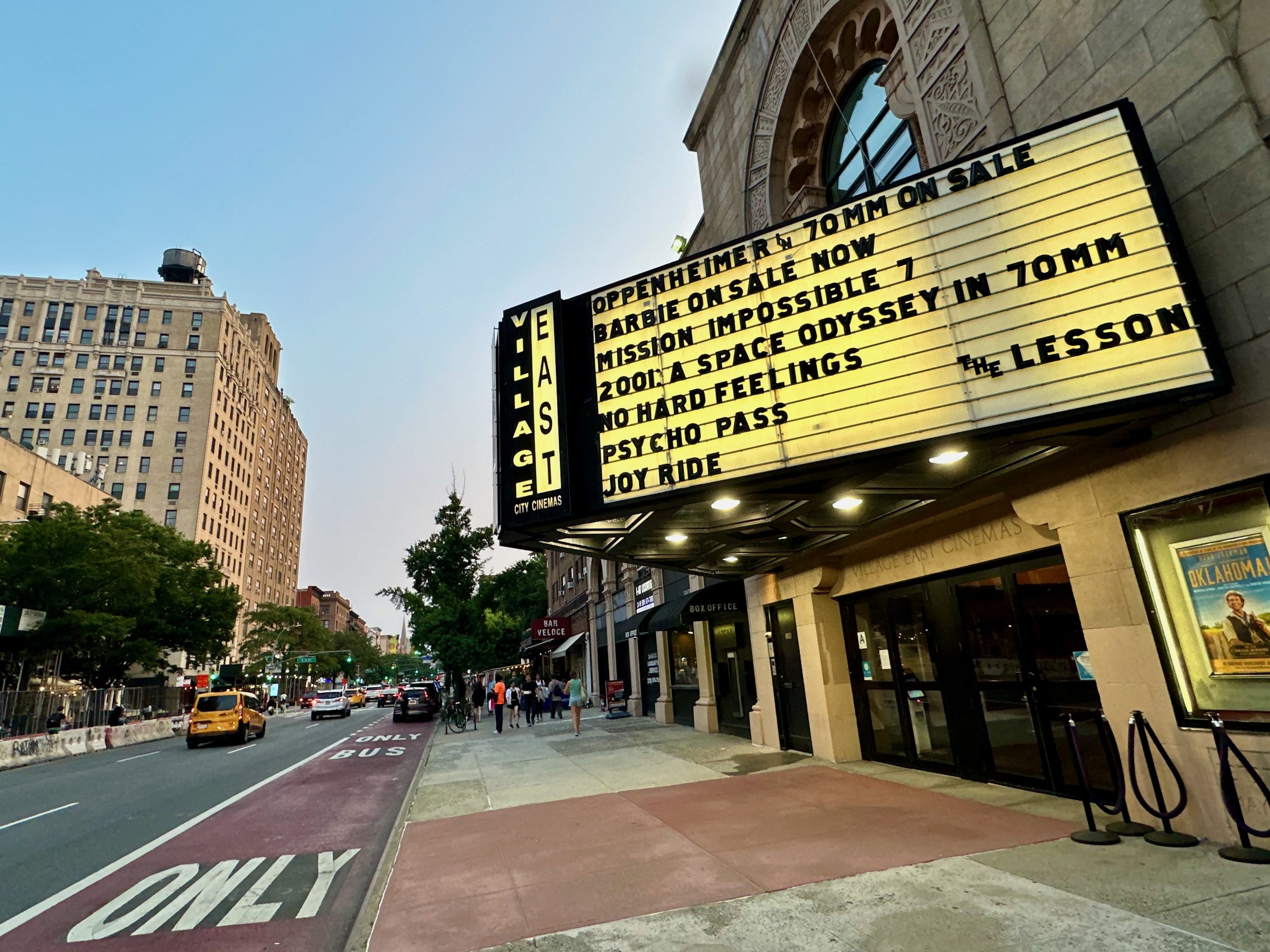
In the entire United States, only 25 theaters can show The Odyssey in true IMAX 70mm. These are spread across the country — from the TCL Chinese Theatre in Hollywood to the AMC Lincoln Square in New York, with isolated locations in Tempe, Irvine, San Francisco, Dallas, Nashville, and a handful of other cities. Tickets for these screenings have been on sale since July 2025 — a full year before the movie’s release — and many shows are already sold out.
So what makes IMAX 70mm so special? The film frame is roughly ten times larger than standard 35mm film. When projected on an IMAX screen, the image fills almost the entire field of human vision — no black bars, no letterboxing. The level of detail is staggering: you can see individual threads in the costumes, the texture of the waves in the Aegean Sea, the sweat on Odysseus’s brow during the climactic battle. It’s the closest thing to being there that cinema has ever produced.
If you’re watching The Odyssey on a standard cinema screen, you’re seeing a cropped version of what Nolan actually shot. The IMAX 70mm version presents the full image as the director intended. It’s not about a “better” movie — it’s about seeing the movie that was actually made.
But Don’t Panic If You Can’t Get a Ticket
Before you start frantically refreshing Fandango, take a breath. The Odyssey is designed to look spectacular in every format. Standard IMAX digital theaters — the kind you find in most multiplexes — still offer a massive screen and excellent projection. Dolby Cinema theaters add Dolby Vision HDR and Atmos sound, which brings the film’s score and sound design to life in ways even IMAX can’t match.
And here’s the dirty secret that Nolan himself would probably acknowledge: even on a regular screen, The Odyssey is still a masterpiece of practical filmmaking. The battle sequences were shot with real stunt performers on real sets. The visual effects are predominantly in-camera. The performances — particularly Damon’s Odysseus, haunted and determined in equal measure — work at any scale.
The IMAX 70mm experience is the absolute best way to see the film, no question. But the second-best way — whether it’s IMAX digital, Dolby Cinema, or even a well-calibrated standard auditorium — is still an extraordinary cinematic experience. Don’t let the scarcity of 70mm screens stop you from seeing this movie on the biggest screen you can find.
Why This Movie Matters
There’s a bigger conversation happening around The Odyssey, and it’s about the future of theatrical exhibition. Nolan’s insistence on shooting and projecting in IMAX 70mm is more than artistic preference — it’s a statement of intent. At a time when the industry is accelerating toward streaming-first release strategies, AI-generated content, and algorithmic programming, Nolan is betting that audiences still crave the kind of experience that can only happen in a movie theater. It’s a bet that first paid off with Oppenheimer, and now he’s doubling down on an even bigger canvas.
The timing couldn’t be more relevant. This week, Netflix revealed that roughly 300 of its titles have used generative AI in production. The streaming wars have pushed Hollywood toward content-as-inventory, where volume often trumps craftsmanship. Nolan’s approach is the counterargument — that cinema at its best is a handmade art form, built on practical craft, physical film, and the shared experience of a darkened room full of strangers watching something extraordinary.
Whether The Odyssey becomes the cultural phenomenon that Oppenheimer was in 2023 remains to be seen. The box office projections are strong — early tracking suggests a $150-200 million global opening weekend — but the film’s real impact will be measured in how it shifts the conversation about what we want from our movie theaters. If audiences showed up in droves for a three-hour drama about the atomic bomb, they’ll certainly turn out for a sword-and-sandal epic shot on the biggest film format ever devised.
The Bottom Line
The Odyssey is playing in theaters everywhere starting today, July 17. If you can score tickets to an IMAX 70mm screening, do it — it’s a once-in-a-generation opportunity to see what the format can do when pushed to its absolute limit. If you can’t, don’t let that stop you. See it in IMAX digital, see it in Dolby Cinema, see it in whatever format your local theater offers. Just see it on the biggest screen you can find.
This is what cinema was built for. Go experience it.
© Telepisodes [EST 2008 - 2018] Disclaimer | Sitemap | About | Blog | Use of this website constitutes acceptance of Telepisodes' Terms of Service and Privacy Policy.