Watch Series Online

Taylor Sheridan Accused of Stealing ‘Yellowstone’ — A 2016 Pitch Sets Off a Copyright Bombshell
Table of Contents
Taylor Sheridan Accused of Stealing ‘Yellowstone’ — A 2016 Pitch Sets Off a Copyright Bombshell
Taylor Sheridan’s sprawling neo-Western empire is under legal fire. A writer has filed a copyright lawsuit accusing the creator of “Yellowstone” of building his marquee series on a pitch she handed to his own management company a full two years before the show ever aired. The complaint, filed on Friday, names Sheridan and a string of heavyweight defendants — including 101 Studios, Paramount and Elevate Entertainment — and lays out a detailed case that the modern Western that revived the genre and spawned a billion-dollar universe was, in the writer’s telling, anything but an original idea.
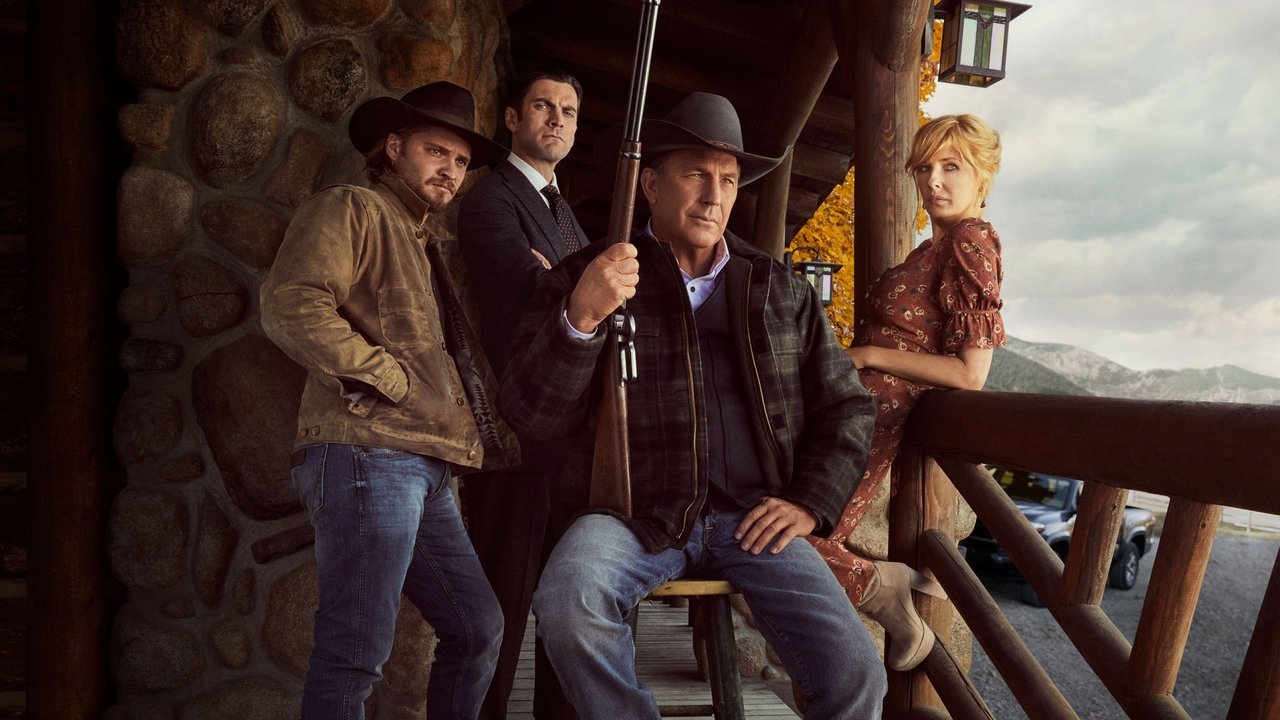
This is the kind of story that lands with a thud for anyone who has followed the rise of the Yellowstone universe. For those who haven’t, the short version is this: few creators have reshaped television economics the way Taylor Sheridan has over the past eight years. What started as a single cable drama about family, land and power in Montana turned into a genuine franchise — with prequel series, spin-offs and a slate of original dramas that made Sheridan one of the most prolific showrunners in the business. A lawsuit aimed squarely at the foundation of that empire is a big deal for fans of the genre, for Paramount, and for how the industry thinks about where ideas actually come from.
What the Lawsuit Says
According to the court documents, obtained by Variety, writer Lauren J. Salkin alleges that in 2016 she pitched her own sprawling Western drama, titled “Sovereign Nation,” to Sheridan’s management company, Elevate Entertainment. The response she says she got was polite but dismissive: “Taylor thanks you very much for your interest. Unfortunately, he’s unavailable for TV projects.”
The problem, the lawsuit argues, is what happened next. Salkin claims “Yellowstone” was greenlit at Paramount “within months” of that rejection — and she contends the show that eventually premiered drew directly on the “specific expressive choices” of her pitch. “Sheridan, however, was not ‘unavailable for TV projects,'” the suit reads. “Instead, he and others used Salkin’s copyrighted works to develop Yellowstone. On June 20, 2018, Paramount Network aired its first episode.”
The Specific Allegations
This isn’t a vague “they copied my idea” complaint. The lawsuit itemizes several concrete elements that it says “Yellowstone” allegedly lifted from “Sovereign Nation.” Among them: a tribal casino functioning as the institutional center of political and development power; a signature confrontation staged in the tribal chairman’s casino office over expansion beyond reservation boundaries; the use of trust land, the absence of zoning restrictions and a 99-year lease structure as the engine for that expansion; and recurring master-plan imagery deployed to dramatize the struggle for territorial control.
It also claims Salkin proposed two actors for her project — Danny Huston and Gil Birmingham — who were later cast in “Yellowstone” in what the suit describes as “materially parallel structural roles.” Birmingham plays the tribal political leader whose authority and development strategy run through the casino; Huston plays the outside development power broker who supplies the political and commercial path for that expansion.
“When the works are objectively compared, the same coordinated design repeatedly appears,” the complaint states. “Casino-centered institutions organize political power; the same unusual land-development mechanisms propel the conflict; parallel scenes perform the same dramatic functions; and the same actors appear in materially parallel roles. These are not merely convergences of a shared genre. Taken together with access and timing, they support a strong inference of copying.”
The Yellowstone Universe at Stake
Whatever the eventual outcome, the case throws a bright light on how large the Yellowstone universe has become — and how much a single copyright challenge could ripple across it. The flagship ran for five seasons and became the highest-rated show on cable, and its DNA radiates outward: the prequel 1883 chronicled the Duttons’ ancestors making their way to Montana, while 1923 picked up the generational saga a few decades later, starring Harrison Ford and Helen Mirren. If you’ve enjoyed either of those, you know exactly the tone and territory Salkin is claiming was hers first.
Sheridan has also built a wider slate of testosterone-heavy, Americana-soaked originals that share the Yellowstone attitude even when they don’t share its characters or setting. Titles like Tulsa King, Landman and Mayor of Kingstown all carry the same gritty, blue-collar, land-and-power sensibility that made Yellowstone a phenomenon. The question the lawsuit implicitly raises is whether that sensibility originated with Sheridan or was, at least in part, borrowed from the pitch of an unknown writer who never got the chance to make her show.
What Happens Next
Realistically, expect this to play out over months rather than weeks. Copyright litigation in the entertainment world rarely rushes to a verdict. The procedural path usually starts with the defendants filing a motion to dismiss, arguing that the claims fail as a matter of law because the alleged similarities are unprotectable ideas or genre tropes rather than expression. Salkin’s lawyers clearly anticipated that move — the complaint is drafted to front-load the concrete, protectable elements and the specific casting overlap, which is precisely the kind of evidence that survives a dismissal challenge.
If the case survives the dismissal phase, the parties will typically head into discovery, where emails, pitch decks, development memos and casting documents become fair game. That’s when cases like this get serious, because access and timing can be documented in a way that mere allegations cannot. It is entirely possible the suit settles quietly — Hollywood settles these all the time. But it is equally possible that the specificity of Salkin’s claims forces a real reckoning over how the show came together in the crucial window between her 2016 rejection and the 2018 premiere.
Why It Matters
Copyright infringement suits in Hollywood are common — and most never make it past an early dismissal or settlement. The bar for proving infringement is high: a plaintiff has to show not just that the defendants had access to the work, but that the two works are “substantially similar” in protected expression rather than just in generic ideas. The very specificity of Salkin’s complaint — naming particular scenes, structural roles and even actors — is what gives it more teeth than the average speculative claim.
For viewers, though, the interest is simpler. This is a story about whether one of the defining television franchises of the decade was truly the product of a singular visionary, or whether the frontier it conquered was first mapped by someone else’s unrealized dream. It’s a reminder that behind even the biggest hits there’s usually a long trail of pitches, rejections and near-misses — and occasionally a grudge that turns into a courtroom showdown.
Reps for Sheridan, 101 Studios, Paramount and Elevate Entertainment did not immediately respond to requests for comment. We’ll be watching for how they answer the complaint, and for what a judge decides about the line between a shared genre and stolen expression.
Sources: Variety; TheWrap; Deadline; Taste of Country
© Telepisodes [EST 2008 - 2018] Disclaimer | Sitemap | About | Blog | Use of this website constitutes acceptance of Telepisodes' Terms of Service and Privacy Policy.