Watch Series Online

Salman Rushdie Says AI Has ‘Zero’ Role in Storytelling, Teases New ‘Midnight’s Children’ TV Adaptation and ‘The Ground Beneath Her Feet’ Film
Table of Contents
Rushdie Draws a Hard Line on AI and Creativity
Salman Rushdie has never been one to mince words, and his latest stance on artificial intelligence is no exception. In an exclusive interview with Variety, the Booker Prize-winning author declared that AI has “zero” role to play in literature, cinema, or storytelling of any kind — dismissing the technology as fundamentally incapable of originality.
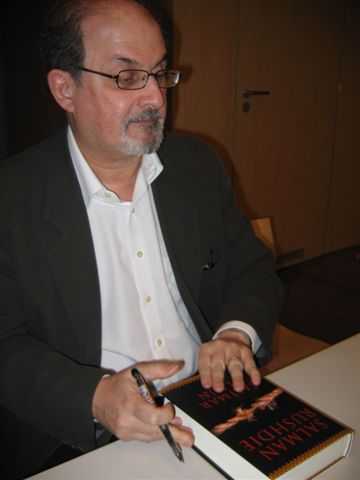

“No,” Rushdie said flatly when asked if AI could contribute to the creative process in any meaningful way. His reasoning cuts to the heart of the debate surrounding generative AI and the arts: machines can mimic, but they cannot imagine.
The timing of his remarks is significant. We’re living through a moment where AI-generated scripts, AI-authored novels, and even AI-created film trailers are making headlines. Studios are experimenting with the technology, writers’ rooms are debating its place, and the entertainment industry is wrestling with questions about authorship, copyright, and the very definition of creativity. Rushdie’s voice adds considerable weight to one side of that argument.
Rushdie’s position is particularly notable given his own history as a writer who has consistently pushed boundaries in form and content. From magical realism to historical fiction to memoir, his body of work is a testament to the kind of human ingenuity that he argues AI can never replicate. Following the 2022 attack on his life, he published Knife: Meditations After an Attempted Murder — a deeply human work that no algorithm could have written, precisely because it draws on lived experience, trauma, and resilience in ways that are fundamentally outside the capability of any language model.
New Adaptations on the Horizon
Beyond his thoughts on AI, Rushdie also dropped some exciting news about his literary legacy moving to the screen. He revealed that there is renewed interest in a multi-episode television adaptation of Midnight’s Children — his 1981 masterpiece that won the Booker Prize and was later named the “Best of the Booker” in 2008. The novel, which tells the story of India’s transition from British rule to independence through the life of Saleem Sinai, a child born at the exact moment of the country’s independence, has long been considered one of the most important works of fiction of the 20th century.
This isn’t the first time Midnight’s Children has been eyed for a serialized adaptation. Netflix announced plans for a series adaptation back in 2018, but the project fell apart by the end of 2019. A feature film adaptation directed by Deepa Mehta was released in 2012, but Rushdie has long felt that the sprawling, multigenerational narrative would be better served by a longer format. A television series would allow the story’s rich tapestry of characters and historical events to breathe in a way a two-hour film simply couldn’t.
In addition to the Midnight’s Children TV project, Rushdie also teased interest in a film adaptation of his 1999 novel The Ground Beneath Her Feet — a sprawling love story set against the backdrop of the global rock music scene, which famously takes its title from a U2 song (the band even recorded a track of the same name for the book’s launch). The novel was ahead of its time in many ways, blending music, mythology, and modern celebrity culture into a narrative that critics are still unpacking today.
“There are conversations around two or three of my books,” Rushdie said, adding the cautious disclaimer: “but believe it when you see it.” It’s a wise note of skepticism from a writer whose work has been optioned and un-optioned multiple times over the decades.
Why This Matters for the Industry
Rushdie’s comments arrive at a moment when the entertainment industry is deeply divided over AI. The 2023 WGA and SAG-AFTRA strikes had AI protections as a central issue. In 2026, those same battles are being fought in courtrooms and contract negotiations. Every major studio has some kind of AI working group, and the debate shows no signs of cooling down.
What makes Rushdie’s perspective distinct is that he’s not just a novelist — he’s also a screenwriter (he co-wrote the 2012 Midnight’s Children film adaptation), a memoirist, and someone who has spent decades thinking about the nature of storytelling across different media. When he says AI can’t create, he’s speaking from a lifetime of creative practice, not just philosophical principle. His 2023 novel Victory City and his reflection on nearly losing his life both underscore the irreplaceable value of the human voice in storytelling — a voice he argues no machine can counterfeit.
His warning should give pause to any studio executive looking to cut costs by replacing human writers with language models. As Rushdie implies, what AI generates may look like a story, but it lacks the essential ingredient that makes storytelling resonate: genuine human experience, emotion, and intent.
For readers who want to explore more stories about the intersection of technology and humanity, check out our page on Black Mirror, which has built its entire legacy on examining the uncomfortable line between technological progress and human cost. Or dive into Westworld, a series that explores what happens when artificial consciousness begins to ask its own questions about purpose and freedom.
What Comes Next
For now, both the Midnight’s Children TV adaptation and the The Ground Beneath Her Feet film project remain in the conversation phase. No studios have been officially attached, no writers’ rooms have been assembled. But the fact that Rushdie is publicly discussing them suggests momentum that wasn’t there even a year ago.
Given the current appetite for literary adaptations on streaming platforms — from Pachinko to One Hundred Years of Solitude to The Perfect Couple — the time feels right for a proper Midnight’s Children series. Rushdie’s novel has all the ingredients that streamers are looking for: an epic sweep, a built-in audience, critical prestige, and themes that resonate across cultures.
On the AI front, don’t expect Rushdie to soften his position anytime soon. For an author who has spent his entire career defending the power and importance of human storytelling — often at great personal cost — the idea of handing the pen to a machine is not just wrong; it’s antithetical to everything he believes about what stories are and why they matter.
If you’re interested in stories about writers and the creative process, check out A Writer’s Odyssey, a film that explores the relationship between a creator and their creation in a way that resonates with Rushdie’s concerns about AI and authorship. And for a classic take on artificial intelligence in cinema, A.I. Artificial Intelligence remains one of the most thought-provoking explorations of what it means to be a machine that feels.
© Telepisodes [EST 2008 - 2018] Disclaimer | Sitemap | About | Blog | Use of this website constitutes acceptance of Telepisodes' Terms of Service and Privacy Policy.