Watch Series Online

Lee Chang-Dong’s ‘Possible Love’ Wins Venice Silver Lion — Now Netflix Streams His Entire Filmography
When South Korean auteur Lee Chang-dong accepted the Silver Lion at the 83rd Venice Film Festival, his quiet thank-you speech captured what makes him one of cinema’s most patient voices. “In an era where labor is disappearing and relationships between people are fraying, I made this film to ask what cinema can and should do,” he told the audience at the Venice closing ceremony on September 12. His latest film, Possible Love, won the festival’s Grand Jury Prize — the second-highest honor in Venice — and it came with a bonus for streamers around the world: Netflix is turning his entire filmography into a global catalog.
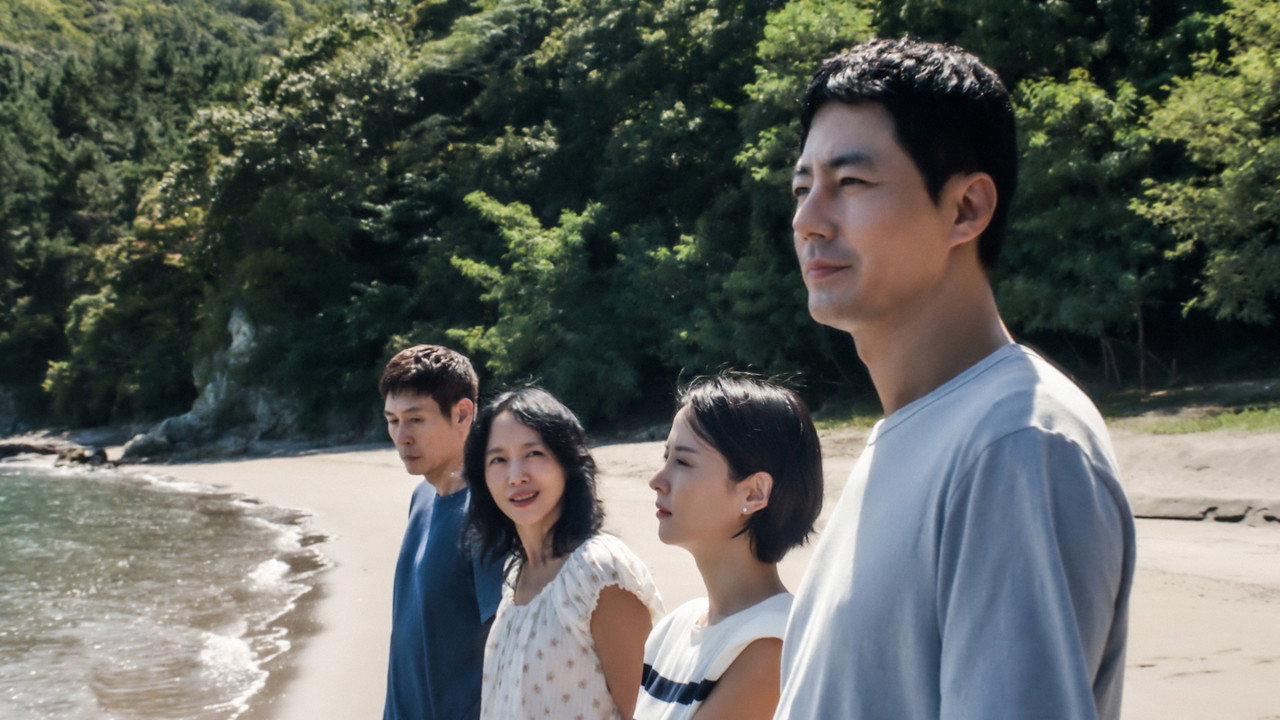
Table of Contents
A Silver Lion and a Streaming Bonanza
The Venice win was a milestone on several fronts. According to The Chosun Daily, Possible Love marked the first competitive-category trophy for a South Korean film at Venice since Kim Ki-duk’s Piëta won the Golden Lion back in 2012. It also gave Lee his first Grand Jury Prize and his first Venice honor since he took the Best Director prize for Oasis in 2002 — a 24-year gap between wins.
Hot on the heels of that success, Netflix revealed it would stream much more of the director’s work. His early films Green Fish and Secret Sunshine are already available from August in Italy, the UK, France, Australia and New Zealand. Peppermint Candy and Oasis began streaming in Italy and Spain on September 4. And Poetry and Burning are slated to arrive in markets including Japan, the U.S., Canada, Australia and New Zealand, with subtitles in up to six languages depending on the territory.
What Is Possible Love About?
Possible Love is Lee’s first feature in eight years, following 2018’s Burning — and it arrives with one of the most formidable Korean ensembles assembled in a single film. Jeon Do-yeon, Sul Kyung-gu, Zo In-sung and Cho Yeo-jeong play two couples whose lives collide when their paths cross.
As the Los Angeles Times laid out in a feature ahead of its premiere, the film is anchored in a brutal chapter of Korean labor history. A laid-off worker and his wife — the wife played by a filmmaker within the movie, a documentarian married to a wealthy businessman — find their marriages tested by class, professional ambition and simmering hidden desires. The film is a meditation on dignity and freedom in modern society, shot across a running time of 164 minutes, blending documentary and drama aesthetics in the way only Lee Chang-dong can.
The director has said the story was inspired by real labor conflict in South Korea, though he distanced it from any single company’s event. “Mass layoffs by large corporations in Korea have enormous aftereffects, changing not just the economy but people’s lives themselves,” he explained at a Seoul production briefing in August, per The Chosun Ilbo.
A Career Built on Patience and Empathy
For anyone catching up, Lee Chang-dong’s filmography is a carefully built study of ordinary people under extraordinary pressure. His debut, Green Fish (1997), announced a director drawn to the friction between individual desire and social expectation. Peppermint Candy (1999) told a devastating seven-chapter story in reverse. Oasis (2002) earned his first Venice prize for its unflinching portrait of an ex-convict drawn into love with a young woman living with cerebral palsy.
Then came a run of films that pushed him into the global conversation. Secret Sunshine (2007) gave Jeon Do-yeon her landmark Cannes performance, a study of grief and faith that remains one of the most painful and honest films about loss ever made. Poetry (2010) won Best Screenplay at Cannes and quietly wrestled with guilt, memory and the act of creation. And Burning (2018), adapted from a Haruki Murakami short story, became his international breakout — a slow-burn thriller that topped countless critics’ lists and introduced a new generation to his style.
What ties these films together is an almost unfashionable patience. Lee refuses to hurry his audiences. He lets scenes breathe, lets silence do the work, and trusts viewers to sit with uncomfortable questions about class, work, dignity and desire. That is precisely why his sudden arrival on a mainstream streaming service matters: it hands one of cinema’s most demanding voices the biggest possible stage.
Korea’s Oscar Entry and a Global Rollout
Beyond Venice, Possible Love has been selected as South Korea’s official entry for the Best International Feature category at the Academy Awards. It will be released in South Korean theaters on September 23, then roll out to Australia and New Zealand on October 22, and the UK, Japan, the U.S. and Canada on October 23 — before its global Netflix debut on November 6.
Lee’s career has been steadily recognized at the world’s biggest festivals. Since his debut with Green Fish in 1997, he has won Best Director at Venice for Oasis in 2002 and Best Screenplay at Cannes for Poetry in 2010. Earlier this year he became the first Korean director to receive the TIFF Ebert Director Award, a lifetime achievement honor handed out at the 51st Toronto International Film Festival — proof of gatekeepers’ mounting respect for a filmmaker whose work maps the emotional fault lines of modern Korean society.
Why It Matters for Streaming Fans
For audiences who only know Korean content through hits like Squid Game or The Glory, the Netflix catalog deal is an invitation to go deeper. Lee Chang-dong is not a director of crowd-pleasing blockbusters; his films are deliberately paced, emotionally demanding character studies that reward patience. That makes him an unlikely candidate for a global streaming push — and yet it’s exactly the kind of prestige play that streaming services now use to build cultural credibility.
The trend extends well beyond Korea. Just as Past Lives and Train to Busan helped Western audiences discover Korean cinema, international auteurs are finding a second life on platforms like Netflix. For a director whose films once struggled to find theatrical release financing — Lee has said Possible Love nearly didn’t get made at the Korean film industry’s weakest point — the streaming windfall is quietly transformative.
The Bottom Line
November 6 should be circled on every serious cinephile’s calendar. That’s the day Possible Love lands globally on Netflix, joining a now-deepening library of Lee Chang-dong’s work. Between the Venice Silver Lion, the Oscar submission and the full catalog rollout, one of the world’s most acclaimed living directors just became dramatically easier to watch — and streaming has a new prestige cornerstone to brag about.
Whether you’re catching up on House of the Dragon for the spectacle or waiting for Lee Chang-dong for the craft, this fall is shaping up to be a great season to be a viewer.
© Telepisodes [EST 2008 - 2018] Disclaimer | Sitemap | About | Blog | Use of this website constitutes acceptance of Telepisodes' Terms of Service and Privacy Policy.