Watch Series Online

Netflix Is Making a Live-Action Persona Series — Here’s Why This Could Be Their Next Stranger Things
Table of Contents
The Announcement
Netflix just dropped a bombshell on a quiet Sunday night, and if you’re a gamer, you’re going to want to sit down for this one. Variety exclusively reported that a live-action TV adaptation of Persona — yes, that Persona, the Atlus JRPG franchise that has consumed roughly 10,000 hours of my life across multiple entries — is officially in the works at the streaming giant.
Let that sink in. After years of rumors, fan-made trailers that got way too many views, and one cryptic SEGA survey that asked players if they’d watch a Persona show, it’s actually happening. And the creative team Netflix assembled? It’s the kind of lineup that makes you nod slowly and think, “okay, they’re taking this seriously.”
Christopher Monfette — whose writing credits include Star Trek: Picard, 12 Monkeys, and 9-1-1 — is attached as writer, executive producer, and showrunner. Monfette is also co-executive producing Marvel’s upcoming VisionQuest series, which tells you he’s comfortable playing in big franchise sandboxes. He’s not some random hire who’s never touched genre material before. The guy knows how to build worlds that already have passionate fanbases.
Behind the scenes, the producing team is equally stacked. Shawn Levy and Robert Atwood are on board through 21 Laps — the same production company that gave us Stranger Things, Arrival, and Shadow and Bone. Levy is one of Netflix’s most bankable producers right now, and 21 Laps has a track record of turning ambitious concepts into genuine cultural phenomena. Meanwhile, Story Kitchen — the outfit behind the Sonic the Hedgehog films, the upcoming Tomb Raider series, and the Streets of Rage movie — rounds out the producing team through Dmitri M. Johnson, Michael Lawrence Goldberg, and Timothy I. Stevenson. Story Kitchen has essentially become Hollywood’s go-to shop for video game adaptations, and their involvement signals that this isn’t going to be some loose, “in-name-only” adaptation that ignores what makes the source material special.
Why Persona? Why Now?
If you haven’t been paying attention, we are living through the golden age of video game adaptations. It wasn’t that long ago that the words “video game movie” made audiences wince — and for good reason. The graveyard of bad adaptations is deep and wide. But something shifted in the last few years, and suddenly we’re getting projects like Cyberpunk: Edgerunners, which single-handedly revived CD Projekt Red’s reputation after a disastrous game launch. We got Arcane, which proved an animated series based on a MOBA could make grown adults cry. HBO’s The Last of Us swept awards season and brought non-gamers into a story about fungal zombies and fatherhood. Fallout became Prime Video’s biggest hit. The paradigm has shifted.
Persona sits at the intersection of everything that’s working right now in the adaptation space. The games are visually stunning — dripping with style, color, and that unmistakable Shigenori Soejima character design that makes every frame look like it belongs in an art book. The music, composed largely by Shoji Meguro, blends jazz, J-pop, funk, and rock into soundtracks that people listen to outside of the games. And the stories? They’re genuinely ambitious — tackling themes of identity, rebellion, trauma, societal pressure, and the masks we wear (literally and figuratively) in ways that most prestige TV dramas only gesture at.
The most recent mainline entry, Persona 5, has sold over 10 million copies worldwide since its original 2016 release. Its expanded version, Persona 5 Royal, sits at a 95 on Metacritic. The Phantom Thieves — Joker, Skull, Panther, Fox, Queen, Oracle, Noir, and Crow — have become recognizable characters far beyond the gaming community. They’ve appeared in Super Smash Bros., multiple anime series, stage plays, and enough merchandise to fill a warehouse. The audience is already there. They’re hungry. The question isn’t whether there’s demand — it’s whether anyone can actually pull this off.
The Million-Dollar Question: Which Persona?
Here’s where things get interesting, and also where they could go sideways. The Persona franchise spans five mainline games (plus countless spin-offs, dancing games, fighting games, and a dungeon-crawler that nobody asked for). Each game tells a largely standalone story with a new cast, new setting, and new themes — connected mainly through shared mechanics (Personas, the Velvet Room, Igor’s unsettling presence) rather than a continuous narrative.
The smart money is on Persona 5 being the source material for Season 1. It’s the most commercially successful entry by a massive margin. Its story — a group of Tokyo high school students who discover they can enter a metaphysical realm born from humanity’s collective unconscious and “steal the hearts” of corrupt adults — has the kind of high-concept hook that marketing departments dream about. The Phantom Thieves are practically designed for serialized storytelling: each target represents a villain-of-the-week arc that builds toward a larger conspiracy. The visual language of the Metaverse — with its bold reds, blacks, and whites, its calling cards, and its heist-movie aesthetic — would translate beautifully to live action if given the budget it deserves.
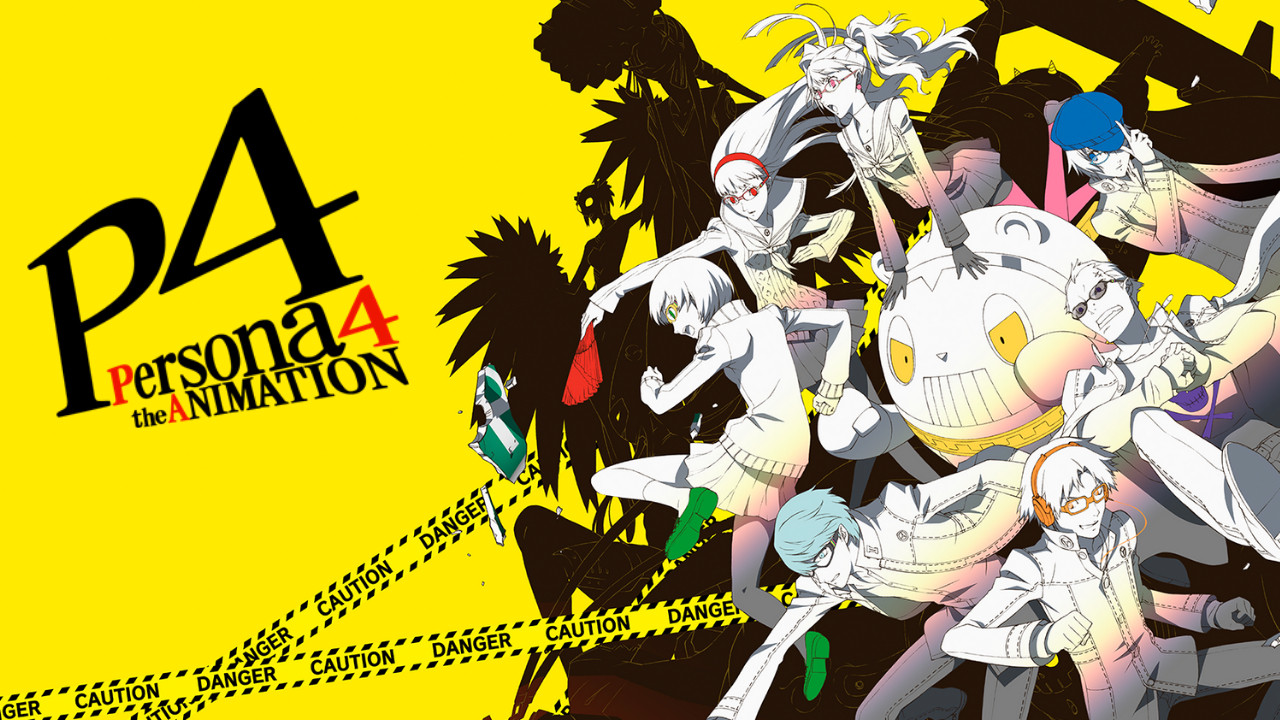
But there’s also a case for Persona 4, whose small-town murder mystery setup (a group of teens in rural Inaba discover a TV world where people’s suppressed selves manifest as monsters) would work brilliantly as a contained first season. Or even Persona 3, arguably the darkest entry, with its themes of mortality, depression, and the weight of existence — the kind of prestige drama Netflix has proven it can nail with shows like Dark and The OA.
The Variety report doesn’t specify which game the adaptation will draw from, which is either smart (keep options open) or concerning (they haven’t decided yet). My gut says Persona 5. The corporate logic is too compelling: biggest audience, most recognizable branding, easiest elevator pitch. “Oceans 11 meets Harry Potter with demons” writes itself.
What Could Go Wrong (And What Needs to Go Right)
I’m cautiously optimistic here, but the cautious part is doing some heavy lifting. Persona is a uniquely difficult franchise to adapt because so much of what makes it special is tied to the interactive nature of the medium. The games spend roughly half their runtime in a social sim — you’re building relationships with confidants, choosing who to hang out with after school, working part-time jobs to boost your stats, and navigating the mundane rhythms of Japanese high school life. That stuff is the soul of Persona. It’s why you care when things go wrong in the other half of the game, the dungeon-crawling combat sections.
A TV show can’t replicate that interactivity. So the adaptation has to find a way to make the characters feel lived-in and three-dimensional without the 80 hours of bonding that the games provide. Castlevania pulled this off by building out the lore and character motivations far beyond what the games ever attempted, essentially treating the source material as a springboard rather than a blueprint. Cyberpunk: Edgerunners told an original story in the universe rather than adapting the game’s plot directly. Both approaches worked because they understood what made the source material feel special and then translated that feeling into a different medium.
The Persona team needs to do the same. Don’t try to cram a 100-hour RPG into ten episodes. Pick a story — whether it’s the Phantom Thieves, the Investigation Team, or S.E.E.S. — and tell it with the same confidence and style that the games have. Cast actors who can sell both the dramatic weight and the goofy humor (Persona games are funny! They’re genuinely funny!). And for the love of Igor, don’t skimp on the music. If the Persona series doesn’t have a soundtrack that makes viewers immediately open Spotify, something has gone terribly wrong.
The Bigger Picture
Netflix betting on Persona makes strategic sense. The streamer has been aggressively building out its gaming-to-screen pipeline — they’ve got The Witcher (multiple seasons and spin-offs), Tomb Raider and Resident Evil series in the works, and a continued relationship with the Castlevania creative team. But Persona represents something different: it’s not just another adaptation, it’s an adaptation of a franchise that has never been done in live action before, in a genre (urban fantasy-meets-psychological thriller-meets-high school drama) that doesn’t have an obvious comparison point.
If it works — and that’s still a big “if” — Persona could be the kind of show that defines Netflix’s next era. Not just another video game show, but the show that makes people realize video game adaptations have entered their prestige TV phase. The creative team is right. The source material is right. The moment is right. Now Netflix just has to not mess it up.
No pressure.
© Telepisodes [EST 2008 - 2018] Disclaimer | Sitemap | About | Blog | Use of this website constitutes acceptance of Telepisodes' Terms of Service and Privacy Policy.