Watch Series Online

Nicolas Cage Calls ‘Spider-Noir’ a Perfect One-Season Show
Table of Contents
The News
Nicolas Cage is speaking out publicly for the first time since Prime Video pulled the plug on Spider-Noir, and the Oscar winner is taking the cancellation of his first-ever television series in stride. In an exclusive statement to Deadline, Cage called his one-season run “perfect” — and even hinted that he always saw the show as a complete, self-contained statement rather than the launchpad for a longer saga.
“For me, one season is perfect, having said what I wanted to say with this dangerous, innovative, pop-art Spider-Man,” Cage told Deadline, adding a characteristically poetic sign-off: “Onwards, upwards, inwards.”
It is a fittingly graceful reaction from an actor who treats every role like a singular artistic event. And it arrives just days after Variety first reported, on September 4, that Amazon would not order a second season of the Marvel series — news that landed even as Spider-Noir headed into Emmy weekend carrying 11 nominations, the most of any Prime Video program this year. The show had premiered only months earlier, in May 2026, rolling out first on MGM+ before arriving on Prime Video, and its entire run lasted just eight episodes.
Why the Axe Lands So Hard
On paper, Spider-Noir looks like a show that deserved a longer life. The 1930s-set crime drama earned rave reviews — a 92 percent critics score and a 90 percent audience score on Rotten Tomatoes — and pulled in a reported 2.6 billion viewing minutes across its first six weeks on streaming, per Nielsen. It debuted at No. 2 on the U.S. Top 10 chart and landed more Emmy nominations than any other Prime Video series in 2026.
So why walk away? Amazon has not offered an official reason, but the numbers that scream “win” for fans tell a different story for the accountants. Spider-Noir’s freshman season reportedly cost around $400 million to produce, in large part because the production shot both a full-color and a black-and-white version of every single episode to support its noir visual identity. That is an enormous bill for a series whose early buzz faded — it dropped out of Prime Video’s daily Top 10 relatively quickly — and in the streaming era, a $400 million season that isn’t a sustained global phenomenon is almost impossible to defend across a second outing.
The Black-and-White Gamble
Part of what made Spider-Noir so striking — and so costly — was its commitment to its own aesthetic. Rather than deliver a single noir-flavored cut, the production shot every episode in both full color and black and white, letting viewers pick how they wanted to experience Cage’s hardboiled web-slinger. It was a bold, borderline-stubborn choice for a Marvel-branded streaming series, but it paid off artistically: the monochrome version let Cage’s ’30s-movie mannerisms land exactly as intended, while the color cut kept the show accessible to viewers who find black-and-white a tough sell.
That dual-format ambition is a big part of why the season reportedly cost in the neighborhood of $400 million — and it turned a critical favorite into a very expensive bet. In the old cable model, a show this distinctive might have been given a few seasons to find its audience. In the streaming model of 2026, that runway barely exists.
A Very Different Kind of Spider-Man
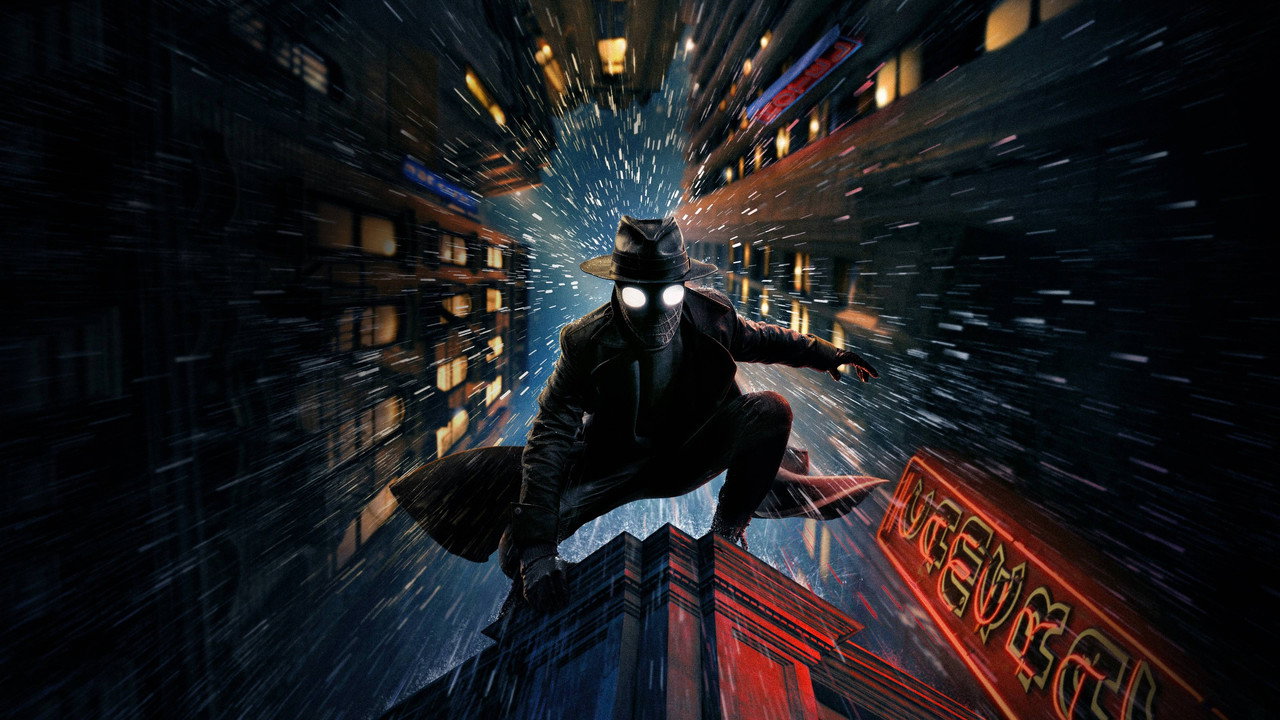
For Cage, though, the show was never just another comic-book property. Based on Marvel’s cult-favorite Spider-Man Noir comics, the series transplanted the web-slinger into Great Depression-era New York, where the character exists as Ben Reilly — a weathered, down-on-his-luck private investigator who remains the city’s one and only superhero, forced to face his past after a deeply personal tragedy.
Cage leaned hard into the noir of it all. Discussing his approach in June, he explained how he returned to the classics to build the performance: “I wanted to go back to those old ’30s and ’40s movies and watch some Howard Hawks and pick up the speed of delivery from those actors. I also thought of Double Indemnity with Fred MacMurray and Barbara Stanwyck and tried to embody that essence, mannerisms and vocalization to collide it with Stan Lee’s masterpiece of Spider-Man.” He likened the result to “a Roy Lichtenstein painting” — a collision of grade-school comic energy and hardboiled cinematic craft.
The casting around him was just as inspired. Lamorne Morris (best known for New Girl) and Li Jun Li rounded out the ensemble, while the series was developed by co-showrunners Oren Uziel and Steve Lightfoot — the latter best known for steering Marvel’s The Punisher — with Phil Lord, Christopher Miller and Amy Pascal of Spider-Verse fame among the executive producers.
What Comes Next for the Spider-Verse on Screen
The end of Spider-Noir does not mean the end of the noir-and-pulp sandbox Amazon and Sony built together. Reports indicate a second live-action series drawn from Sony’s Universe of Marvel Characters is already in development and expected to be announced soon, a sign that the two studios see enough potential in the broader partnership to keep going even after this first flagship was grounded.
That future pipeline is partly why this cancellation stings. On the film side, Sony is riding high — Spider-Man: Brand New Day recently topped $900 million domestically and crossed $2.3 billion worldwide, a monster hit that proves audiences still turn out for the wall-crawler. On television, however, the math is different. Spider-Noir joins a growing 2026 pattern of critically adored, big-budget genre shows getting one season and then vanishing as streamers tighten budgets — even when the reviews and the award attention are there.
Fans hoping for more of Cage’s Ben Reilly can at least rewatch all eight episodes on Prime Video, available in both black-and-white and color. And Cage himself isn’t going anywhere. His next project with the streamer is Madden, in which he plays legendary football coach and broadcaster John Madden; it’s set to premiere November 18.
The Takeaway
Spider-Noir was a strange, stylized, genuinely confident swing — the kind of show that a big streamer used to let grow into a cult favorite. That Prime Video would end it after eight episodes, despite the Emmys love and a near-perfect audience score, is a stark reminder of how the economics of streaming have shifted: rarer and more expensive shows now have to be overnight global hits to survive, not merely excellent.
Still, Cage has given fans something to hold onto. He calls the season “perfect,” and in a way he’s right — a complete story, a singular performance, and a very good reason to rewatch. Whether you’re a longtime Spider-Man head or just a fan of bold television, the eight episodes on Prime Video are worth your time. If you’re craving more streaming superhero energy in the meantime, Prime Video’s The Boys and Invincible are still running, and the original Spider-Man movies remain a fun revisit.
Would you have watched a second season of Spider-Noir, or do you agree with the idea that one good standalone season was enough?
© Telepisodes [EST 2008 - 2018] Disclaimer | Sitemap | About | Blog | Use of this website constitutes acceptance of Telepisodes' Terms of Service and Privacy Policy.