Watch Series Online

Netflix Reveals ~300 Titles Used Generative AI This Year — Inside Q2 Earnings and the Live-Programming Pivot
Table of Contents
The Numbers Behind the Headlines
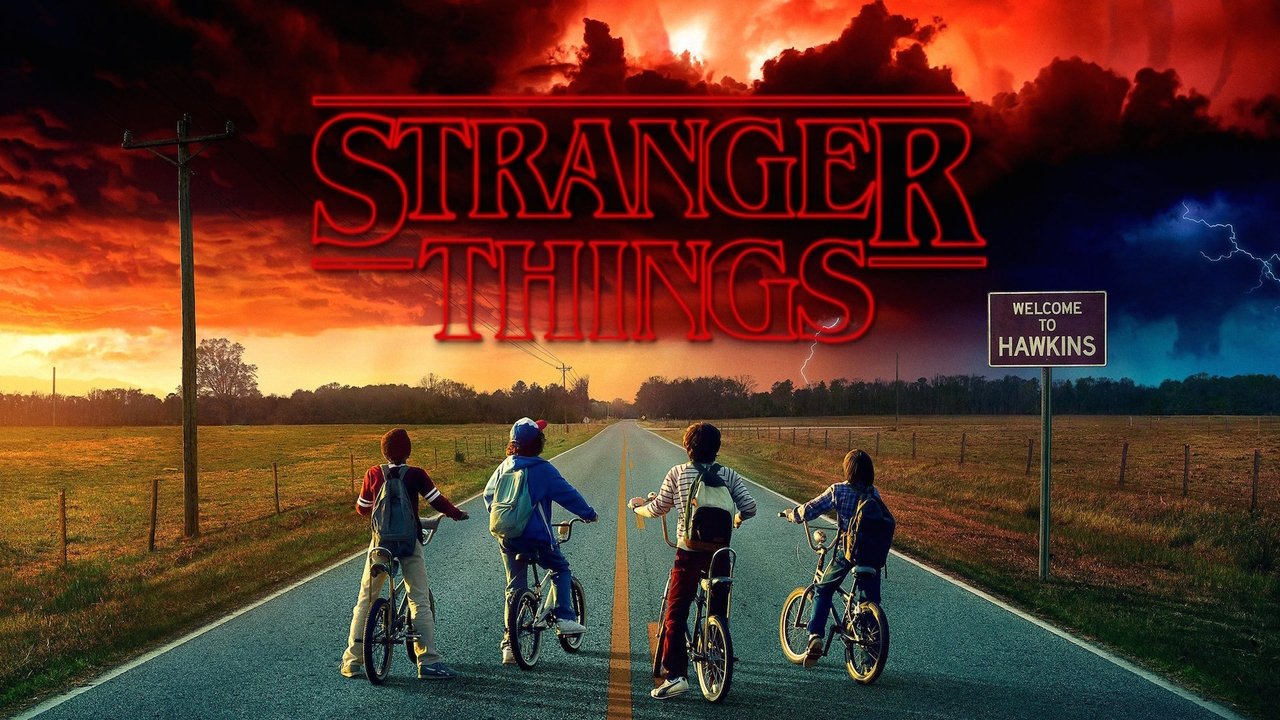
Netflix reported its second-quarter earnings on Thursday, and the results paint a picture of a streaming giant in transition. Revenue came in at $12.56 billion (up 13% year-over-year), with earnings per share of $0.80 slightly beating analyst expectations of $0.79. Operating income hit $4.19 billion, and net income landed at $3.4 billion. Solid numbers by any measure — yet the stock dropped in after-hours trading, continuing a slide that’s seen Netflix shares lose nearly 45% of their value over the past twelve months, despite powerhouse content from their library including Stranger Things and a growing roster of live events.
Why the disconnect? The market’s jitters aren’t about the quarter itself — they’re about what’s coming next. Netflix’s Q3 revenue guidance came in lighter than expected, suggesting the company sees headwinds ahead even as it pushes harder into advertising, live events, and a revamped content strategy.
But the most talked-about revelation from the earnings call wasn’t the financials. It was Netflix’s acknowledgment that roughly 300 titles across its library have used generative AI in their production processes so far this year.
Netflix’s AI Transparency — 300 Titles and Counting
In its Q2 shareholder letter, Netflix disclosed that approximately 300 programs across its streaming library incorporated generative AI tools this year, with the majority of that work concentrated in post-production. The company framed it as a natural evolution, stating it’s “increasingly leveraging these tools to deliver higher quality output more quickly and efficiently.”
Netflix singled out three specific titles as examples of its AI integration: the Indian sports thriller series Glory, the Brazilian soccer miniseries Brasil 70: A Saga do Tri, and the recently-released docuseries The American Experiment. The latter, which premiered on June 24, includes approximately 17 minutes of what Netflix describes as “AI-enhanced” footage woven into its examination of America’s 250-year history.
This level of transparency is notable. While other studios have quietly experimented with generative AI in visual effects, background generation, and script analysis, few have offered a concrete number. Netflix’s admission puts the scale of AI adoption in Hollywood into sharp perspective — we’re not talking about a handful of experimental projects, but hundreds of mainstream productions already using the technology in meaningful ways.
The reaction has been mixed. Industry observers point out that the AI use is concentrated in areas audiences rarely notice directly — enhancing background environments, smoothing visual effects transitions, and accelerating rotoscoping and compositing work. But the creative community remains wary, with guilds and unions pushing for clearer guardrails around AI deployment in film and television production.
Live Programming: Netflix’s New Frontier
Buried in the earnings news was a clear signal about Netflix’s strategic direction: live programming is now a cornerstone of its growth strategy. Co-CEOs Ted Sarandos and Greg Peters used the earnings interview to highlight the performance of several high-profile live events, including BTS: The Comeback Live – Arirang, The Roast of Kevin Hart, and the MLB Home Run Derby.
The results are encouraging enough that Netflix is doubling down. The company has already locked in an expanded NFL slate, the 2027 FIFA Women’s World Cup, and ongoing WWE and MLB events. Funny AF, Kevin Hart’s stand-up competition series that launched in April, has already been renewed after drawing nearly 42 million views according to Netflix’s internal metrics.
This pivot to live programming represents a fundamental shift for a company that built its empire on on-demand, ad-free viewing. Netflix is increasingly mirroring the traditional TV playbook — live sports, awards-style events, and tentpole specials — while simultaneously pushing into ad-supported tiers that now reach over 250 million global monthly active viewers.
The advertising business is growing faster than many expected. Netflix revealed that upfront negotiations are in “advanced stages” and expects commitments to close within weeks. With 45% of US Netflix households now watching on the ad-supported tier, the revenue diversification is starting to pay real dividends.
The Viewership Data Shift — Annual Reports Starting in 2027
In a less flashy but equally significant move, Netflix announced it will discontinue its biannual “What We Watched” viewership reports in favor of a single annual report starting in 2027. The latest edition of the report, which covered the first half of 2026, will be the last released on the twice-a-year schedule.
The data from that final semi-annual report tells an interesting story. Original series like His & Hers, the Jon Bernthal and Tessa Thompson crime thriller, led the pack with 104 million global views. Korean content continues to punch above its weight — the action drama Teach You a Lesson amassed 54.9 million views in just six weeks, and KPop Demon Hunters ranked as Netflix’s fourth most-watched film of the first half of 2026, nearly a year after its initial release. Even prestige catalog titles like The Crown continue to draw strong engagement as new audiences discover the series.
On the movie side, Netflix’s animated originals like Swapped and action films like War Machine and Apex dominated the film charts, alongside the ever-reliable holiday favorites that continue to generate massive viewership year after year.
The Sophomore Slump Narrative
Sarandos pushed back against the growing narrative that Netflix’s returning series are suffering from a “sophomore slump.” While viewership data from third-party analysts has shown declines for returning seasons of shows like The Night Agent (down ~40% from season 2 to season 3) and the live-action One Piece (down ~34% at the 13-day mark from season 1 to season 2), Netflix’s co-CEO argued that the company has actually improved retention on returning series compared to historical benchmarks.
The numbers tell a nuanced story. Some of the viewership decline is natural — the biggest shows inevitably draw the biggest audiences on debut, and sequels rarely match the cultural moment of a breakout hit. But some of it reflects genuine audience fatigue with certain formats, and Netflix’s algorithm-driven recommendation system that may not serve returning series as aggressively as new premieres.
The solution, according to Netflix, is not to make fewer returning series, but to invest more aggressively in the ones that do break through while continuing to flood the zone with new concepts. It’s a volume strategy dressed as a quality strategy — but given Netflix’s $17 billion annual content budget, volume is a weapon they’re unafraid to use.
What’s Coming Next
With the Q2 results behind them, Netflix’s focus now turns to a packed second half of 2026. The live programming calendar is stacked: the expanded NFL slate kicks off in the fall, the 2027 FIFA Women’s World Cup build-up begins in earnest, and more live comedy and music events are in development.
On the content side, the company is betting big on creator-driven programming. The acquisition of Ben Affleck’s AI-powered production startup InterPositive earlier this year signals that Netflix sees AI not just as a post-production shortcut but as a creative tool for storytelling. The challenge will be balancing that ambition against the very real concerns of the creative community — and the unions that represent them.
Netflix also continues to expand its games offering with Netflix Playground, a new gaming initiative aimed at children 8 and under, and is testing a revamped mobile app with a vertical video “Clips” feed designed to help subscribers discover content faster — a feature that looks suspiciously like the TikTok-style browsing that’s eating traditional streaming engagement.
For all the hand-wringing about stock price and engagement metrics, Netflix remains the dominant force in streaming by a wide margin. The question isn’t whether Netflix will survive — it’s whether it can evolve from a binge-watching destination into a genuine entertainment ecosystem that competes across live sports, gaming, advertising, and traditional programming simultaneously. The Q2 earnings suggest the company is betting it can do all of the above. Whether it can execute on all fronts at once is the story to watch for the rest of 2026.
© Telepisodes [EST 2008 - 2018] Disclaimer | Sitemap | About | Blog | Use of this website constitutes acceptance of Telepisodes' Terms of Service and Privacy Policy.