Watch Series Online

My Hero Academia Final Season: A Farewell to the Anime That Defined a Generation
After eight incredible seasons, 170 episodes, and a legacy that changed anime forever, My Hero Academia has taken its final bow. The legendary shonen series that introduced the world to Izuku Midoriya and the students of Class 1-A concluded its epic run in December 2025 — and then capped off its victory lap by dominating the 2026 Crunchyroll Anime Awards just this month.
If you’ve been anywhere near the anime community this past year, you know the Final Season was an event. Tears were shed. Theories were debated. And a generation of fans who grew up with Deku said goodbye to the heroes who inspired them. Now that the dust has settled, it’s time to look back at what made My Hero Academia’s final chapter so special — and why this series deserves its place among the all-time greats of television animation.
Trailer: Crunchyroll (YouTube)
📺 Also on Telepisodes
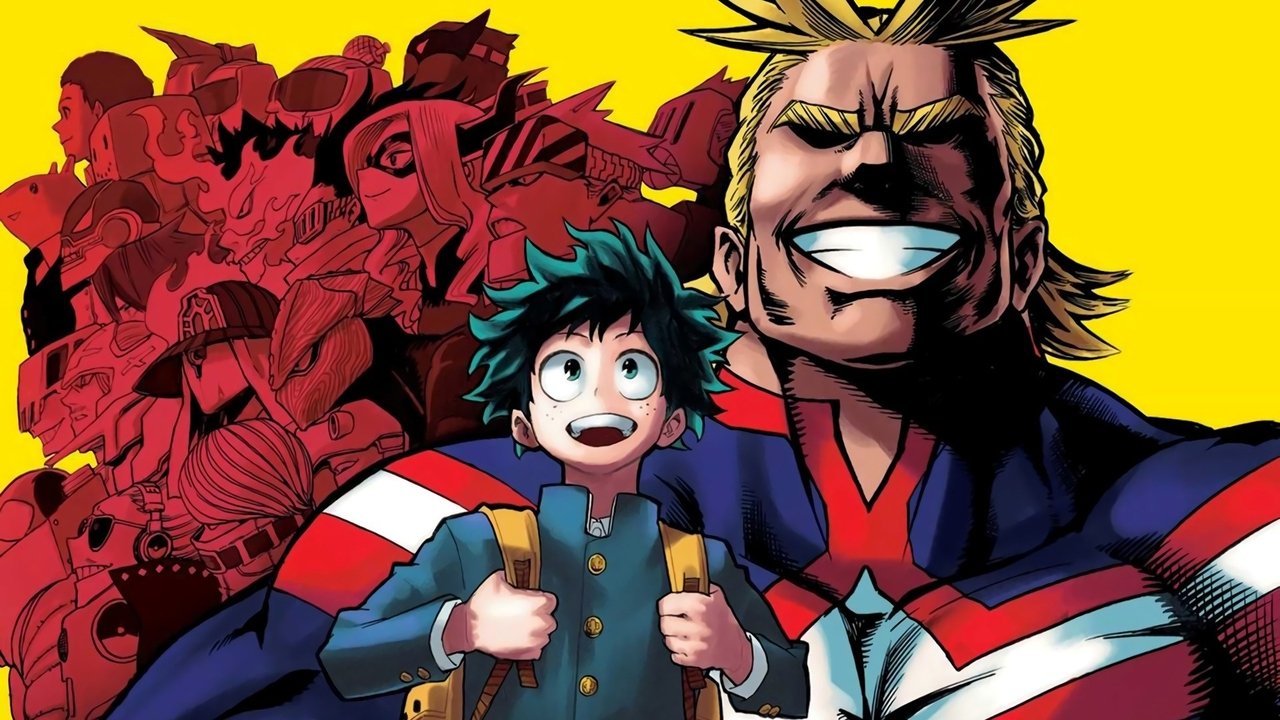
The Journey: From Quirkless Dreamer to the World’s Greatest Hero
When My Hero Academia premiered in April 2016, it arrived in a post-Naruto landscape hungry for the next great shonen. Kohei Horikoshi’s manga had been running in Weekly Shonen Jump since 2014, building a passionate following with its unique premise: in a world where 80% of the population has superpowers (called “Quirks”), one Quirkless boy dares to dream of becoming the greatest hero.
Izuku “Deku” Midoriya’s journey from bullied underdog to the inheritor of All Might’s power — the legendary One For All — became one of the most compelling hero’s journeys in modern anime. What set MHA apart from its predecessors wasn’t just its creative power system or its spectacular fight choreography (though both were exceptional). It was the emotional honesty at its core.
Deku cried. A lot. He took notes. He analyzed. He strategized. He failed, repeatedly, and got back up. In a genre often dominated by naturally gifted protagonists, Deku’s defining trait was his willingness to work harder than anyone else. For millions of fans around the world, that was deeply relatable.
Season 8: The Final Season Breakdown
The Final Season (Season 8) adapted the climactic arcs of Horikoshi’s manga: the Final War Arc and the Epilogue. Without diving into major spoilers, here’s what made this season so impactful.
The Final War Arc brought every storyline, every character, and every theme of the series to a head. The battle between the heroes and the Paranormal Liberation Front — led by the terrifying All For One and his protégé Tomura Shigaraki — was the largest-scale conflict in anime history. Studio Bones delivered some of the most ambitious animation of the decade, with fight sequences that pushed the boundaries of what TV anime could achieve.
Key moments that had the fandom in absolute shambles included the full reveal of All For One’s true plan, the culmination of the Todoroki family drama (which had been building since Season 2), and the emotional peaks of Deku’s final confrontation. The season didn’t just deliver action — it delivered closure for dozens of characters fans had spent nearly a decade with.
The Epilogue gave us something rare in shonen anime: a proper goodbye. Rather than ending abruptly after the final battle, the season spent several episodes showing where every major character ended up. Who became a pro hero? Who took a different path? What did the world look like after the dust settled? It was a gift to the fans — a chance to savor the ending rather than just survive it.
The Cast: Voices Behind the Heroes
The Japanese voice cast of My Hero Academia became legends in their own right over the course of the series. Daiki Yamashita’s portrayal of Deku — capturing both his trembling vulnerability and his roaring determination — is one of the great voice acting performances in anime history. Kenta Miyake’s All Might defined the character’s dual nature: the bombastic Symbol of Peace and the frail Toshinori Yagi.
Nobuhiko Okamoto’s Bakugo underwent perhaps the most dramatic character arc in the series, evolving from a cruel bully into a complex rival and eventual ally. Yuki Kaji’s Todoroki, Ayane Sakura’s Uraraka, and Koki Uchiyama’s Shigaraki all delivered performances that elevated the material into something genuinely special.
The English dub, led by Justin Briner (Deku), Christopher Sabat (All Might), and Clifford Chapin (Bakugo), earned its own passionate following and maintained a remarkably consistent quality across all eight seasons — a feat few long-running dubs can claim.
The Anime Awards Triumph
At the 2026 Crunchyroll Anime Awards, held just this month, My Hero Academia Final Season swept several major categories. The show took home Anime of the Year — beating out fierce competition including Jujutsu Kaisen Season 3, Frieren: Beyond Journey’s End, and Solo Leveling Season 2.
The win was both a recognition of the Final Season’s quality and a lifetime achievement award for the franchise as a whole. After years of being nominated but often losing to newer, shinier competition, MHA finally got its flowers at the moment it mattered most.
Additional wins included Best Action, Best Voice Artist Performance (Daiki Yamashita), and Best Continuing Series. The ceremony became an emotional celebration, with creator Kohei Horikoshi delivering a tearful video message thanking fans for “ten years of going Plus Ultra.”
Why My Hero Academia Mattered
It’s easy to look at MHA’s massive commercial success — over 100 million manga copies in circulation, multiple hit movies, a global merchandise empire — and call it a triumph. But the series’ real legacy goes deeper than numbers.
My Hero Academia arrived at a moment when superhero stories dominated global pop culture, and it asked a simple but profound question: what does it actually mean to be a hero? Not a celebrity with a costume and a Quirk, but a genuine force for good? The answer, explored across 170 episodes, was never simple — and that was the point.
The series grappled with systemic injustice, exploring how a society built around Quirks inevitably left some people behind. Characters like Stain, Gentle Criminal, and the members of the League of Villains weren’t just obstacles to overcome — they were products of a broken system, and their grievances forced the heroes (and the audience) to confront uncomfortable truths.
At the same time, MHA never lost its fundamental optimism. Deku’s answer to the world’s darkness wasn’t to become dark himself. It was to reach out. To understand. To save people even when — especially when — they didn’t think they deserved saving. In an era of increasingly cynical superhero deconstructions, My Hero Academia was a reconstruction — an argument that heroism, real heroism, is worth aspiring to.
The Legacy: What Comes Next
My Hero Academia’s ending doesn’t mean the franchise is going away. The spin-off manga My Hero Academia: Vigilantes already received its own anime adaptation in 2025, telling a grittier street-level story set years before the main series. Multiple movies, including 2024’s You’re Next, have expanded the universe in exciting ways.
Rumors of a sequel series — potentially following the next generation of heroes — have circulated since the manga’s conclusion, though nothing has been officially confirmed. Studio Bones has expressed interest in continuing to work within the MHA universe, and with the franchise’s enduring popularity, it seems like a matter of when, not if.
For now, though, the core story is complete. Deku’s journey from Quirkless nobody to the world’s greatest hero has been told, and it ended on its own terms. In an industry where popular series are often stretched far beyond their natural endpoint, My Hero Academia had the courage to end — and the wisdom to end well.
Where to Watch My Hero Academia
All eight seasons of My Hero Academia are available to stream on Crunchyroll, with both subbed and dubbed versions. The series is also available on Hulu and Funimation (in regions where the service still operates).
The four MHA movies — Two Heroes (2018), Heroes Rising (2019), World Heroes’ Mission (2021), and You’re Next (2024) — are also available on Crunchyroll and various digital platforms. While the movies are technically side stories, You’re Next in particular contains canon elements that enrich the Final Season experience.
For newcomers, the complete series represents a significant but rewarding commitment. At roughly 24 minutes per episode, all 170 episodes come to about 68 hours of content — a binge-watch that would take just under three days straight. Pace yourself, stay hydrated, and prepare for an emotional journey unlike any other.
Final Thoughts: Plus Ultra, Always
Endings are hard. TV endings are especially hard. Anime endings are notoriously hard. For My Hero Academia to stick the landing after eight seasons, 170 episodes, and a decade of sky-high expectations is a genuine achievement.
The Final Season didn’t just deliver a satisfying conclusion — it honored everything that came before. The character arcs that had been building since Season 1 paid off. The themes that Horikoshi had been exploring since Chapter 1 reached their natural resolution. And the final message — that anyone can be a hero, that the truest heroism is reaching out to others — landed with the emotional weight of a decade of storytelling behind it.
Deku started as a boy who took notes on heroes because he couldn’t be one. He ended as the hero who inspired a new generation to take notes on him. That’s not just a satisfying arc — it’s a perfect one.
Go beyond. Plus Ultra.
Related Articles
- Avatar: The Last Airbender Season 2 — Trailer Breakdown, Toph’s Debut, and Everything We Know
- Netflix June 2026 Lineup: Enola Holmes 3, Avatar S2, and Everything Coming Next Month
- HBO Max Summer 2026 Preview: House of the Dragon S3, The Axe, and Every Major Release Coming Soon
Sources: Crunchyroll Anime Awards, Animation World Network, GamesRadar+, TMDB
Did My Hero Academia’s Final Season give you the ending you were hoping for? Which character’s conclusion hit you the hardest — and where do you think the franchise should go next? Share your thoughts in the comments!
© Telepisodes [EST 2008 - 2018] Disclaimer | Sitemap | About | Blog | Use of this website constitutes acceptance of Telepisodes' Terms of Service and Privacy Policy.