Watch Series Online

Mark Wahlberg on Using AI in Film ‘the Right Way’ and Being Open to an AI Clone Carrying on His Legacy
Mark Wahlberg has never been one to shy away from a bold move. From his early days as a rapper to becoming one of Hollywood’s most bankable stars, the guy has built a career on reinvention. But his latest pivot might be his most futuristic yet — the actor and angel investor is openly embracing AI in filmmaking, and he’s even welcoming the idea of an AI clone carrying on his legacy after he’s gone.
Speaking at TechCrunch Disrupt 2026 in San Francisco, Wahlberg laid out his vision for how artificial intelligence should — and shouldn’t — be used in the entertainment industry. It’s a nuanced take that puts him somewhere in the middle of a debate that has Hollywood firmly split into camps.
Table of Contents
AI as a Tool, Not a Replacement
Wahlberg’s core argument is straightforward: AI should enhance filmmaking, not replace the humans who make it happen. He pointed to his upcoming Pete Rose biopic, in which he’ll star in the title role, as a real-world example of how the technology can be applied responsibly.
“It’s a fairly expensive movie, but we’re talking about utilizing [AI] to enhance the stadium setting, things of that nature,” Wahlberg explained. The production team is exploring AI-enhanced visual effects specifically to improve large-scale elements like stadium environments — the kind of costly set pieces that can make or break a budget.
But he drew a hard line at the idea of AI-generated scripts and fully synthetic performances. “I don’t think you should just, you know, put an idea into ChatGPT and it puts out a script, and then you should go make that and not use real actors,” he said. “But if you can use it to enhance what you’re doing, I’m all for that.”
It’s a distinction that matters. Wahlberg isn’t anti-technology — he’s pro-storytelling. And for him, the two don’t have to be in conflict.
The CAA Vault and Digital Likeness
When TechCrunch Editor-in-Chief Connie Loizos asked whether he had visited the Creative Artists Agency Vault — a facility that uses scanning technology to capture actors’ bodies, faces, movements, and voices for creating AI replicas — Wahlberg admitted he hadn’t. But he expressed genuine interest in exploring it.
“I would be interested because I think in the future, if that’s where things go, it would be cool that my children or my grandchildren could be in charge of my likeness and my image, and hopefully put me in some good movies,” he said.
The idea of family-controlled digital likenesses is a significant one. Rather than studios owning a performer’s digital twin in perpetuity, Wahlberg envisions a model where the people who actually know and care about the actor get to decide how that likeness is used. It’s a framework that could reshape conversations around consent, ownership, and legacy in the entertainment industry.
Ted and the Posthumous Career
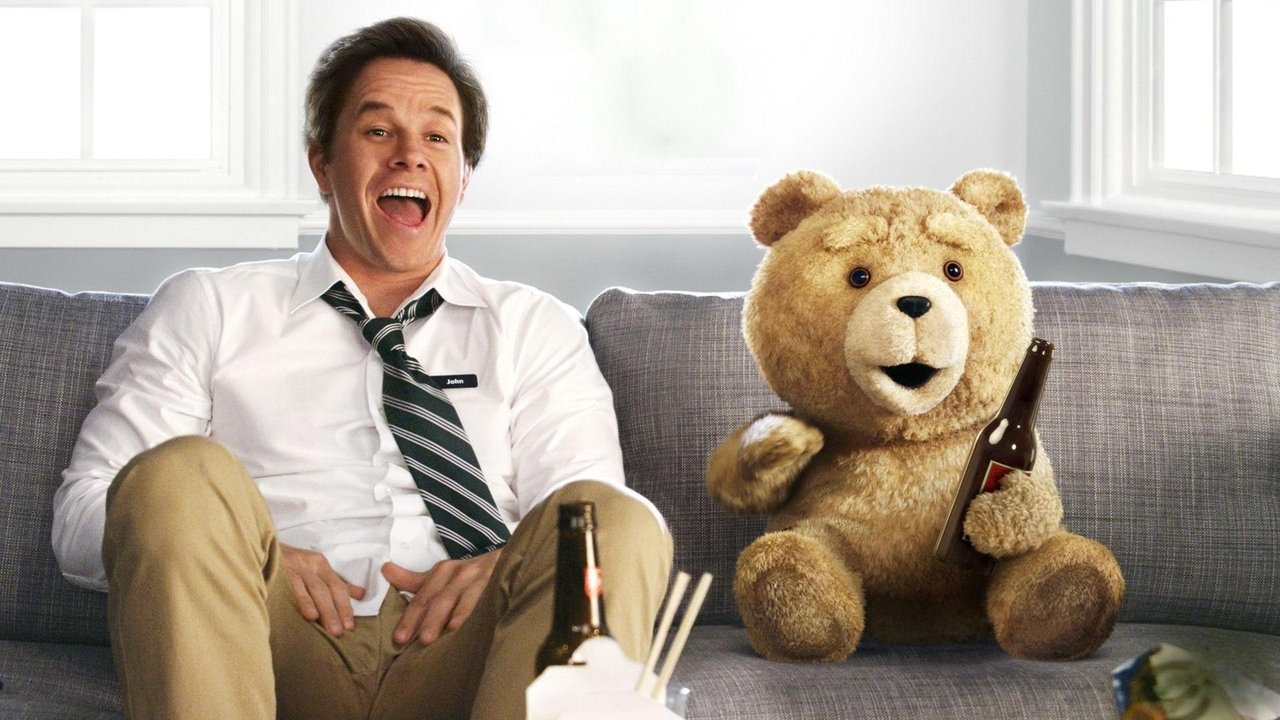
Wahlberg’s comments about his upcoming animated series Ted were perhaps the most revealing. He said he wouldn’t oppose the show continuing for decades with an AI version of his likeness — as long as there’s genuine audience demand.
“I think it’s cool if I’m no longer able to do it or don’t exist, and if it could continue and people want to see it, I think it’d be interesting to see where things go,” he said. “I think there’s certain things from my childhood that I wish still existed and were still a part of my life. I wouldn’t be opposed to it.”
The Ted franchise has been one of Wahlberg’s most commercially successful ventures. The first film, released in 2012, grossed over $549 million worldwide on a $50-65 million budget. Ted 2 followed in 2015, and the animated series continues the story. For Wahlberg, the idea that the franchise could outlive him isn’t a threat — it’s an opportunity.
A Career Built on Reinvention
Wahlberg’s openness to AI makes sense when you look at his career trajectory. He started as Marky Mark, a rapper known for “Good Vibrations,” before transitioning to serious acting with Boogie Nights in 1997. From there, he earned an Oscar nomination for The Departed and won a Golden Globe for The Fighter. He’s starred in everything from Transformers to the Mile 22 franchise.
Throughout it all, Wahlberg has maintained a reputation as someone who adapts. He’s an angel investor with stakes in various tech ventures, and he’s consistently positioned himself at the intersection of entertainment and innovation. His latest comments on AI feel like a natural extension of that identity.
The Bigger Picture for Hollywood
Wahlberg’s stance arrives at a pivotal moment for the entertainment industry. The 2023 WGA and SAG-AFTRA strikes brought AI concerns to the forefront, with writers and actors demanding protections against unauthorized use of their work and likenesses. Studios have since been navigating a landscape where AI can generate scripts, create de-aged versions of actors, and even produce entire synthetic performances.
What makes Wahlberg’s position notable is that he’s not rejecting the technology outright — he’s proposing a middle path. Use AI to enhance stadium settings, reduce production costs, and preserve legacies. But keep real actors in front of cameras and real writers behind scripts. It’s a pragmatic approach that acknowledges AI’s potential without surrendering the human element that makes storytelling resonate.
“I’m not so passionate about effects-driven movies per se, as opposed to real storytelling,” Wahlberg said. That single sentence might be the most important takeaway from his entire TechCrunch Disrupt appearance. In an industry increasingly tempted by the spectacle of AI-generated content, Wahlberg is reminding everyone that the story is what matters.
What’s Next
Wahlberg’s Pete Rose biopic is shaping up to be a major test case for his AI philosophy. If the film succeeds using AI-enhanced visuals while keeping human storytelling at its core, it could become a blueprint for other productions navigating the same questions.
As for the AI clone? Wahlberg seems genuinely at peace with the idea. Whether it’s his children managing his digital likeness or an AI version of him continuing the Ted franchise, the actor appears ready to let his legacy evolve in ways that would have seemed like science fiction just a decade ago.
One thing is certain: Mark Wahlberg isn’t going to let the future pass him by. He’s too busy building it.
© Telepisodes [EST 2008 - 2018] Disclaimer | Sitemap | About | Blog | Use of this website constitutes acceptance of Telepisodes' Terms of Service and Privacy Policy.