Watch Series Online

Ink: Danny Boyle’s Tabloid Drama Opens Venice Film Festival to a Standing Ovation
Table of Contents
The Sun Always Wins — At Least on Opening Night
Danny Boyle has done it again. Ink, his blistering new drama about the birth of the modern tabloid, walked onto the stage at the 83rd Venice Film Festival on Wednesday night and earned what can only be described as a proper Italian welcome — a standing ovation that lasted close to five minutes.
That’s not bad for a movie about a man who built an empire on bad behaviour.
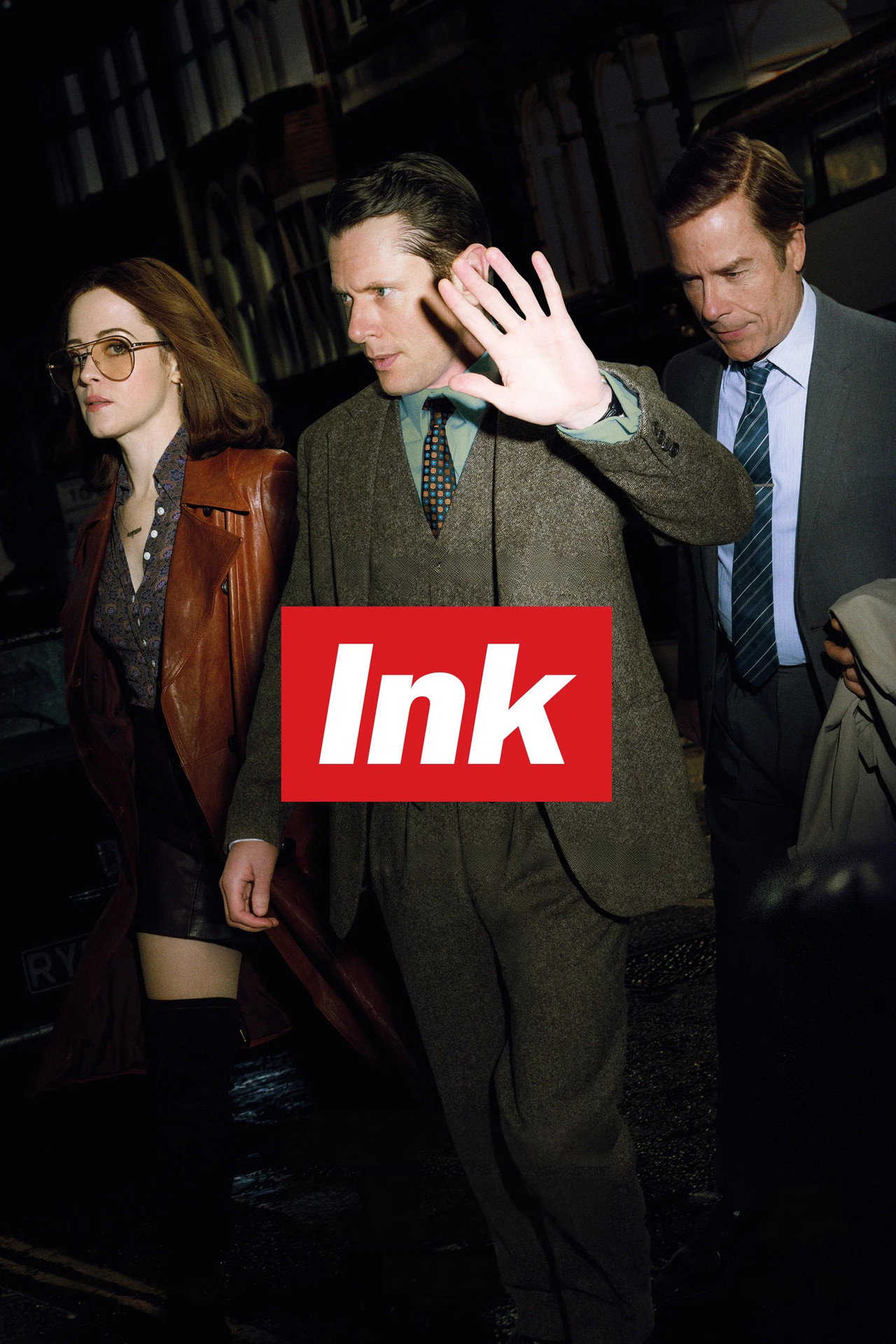
The film — which opens in UK cinemas on December 10 — is the story of how Rupert Murdoch, played with chilling charm by Guy Pearce, bought The Sun in 1969 and turned a failing newspaper into the most powerful, polarising force in British media. Jack O’Connell plays Larry Lamb, the rough-edged editor Murdoch recruits to run the paper his way: fast, loud, and unapologetically populist. Claire Foy appears as Jules Davies, Lamb’s wife, anchoring the human cost at the centre of the storm.
It’s based on James Graham’s 2017 stage play of the same name, and Boyle — who also produced — has transplanted it from the theatre to a kinetic cinematic language that does everything you’d hope a tabloid-origin story would do: moves fast, hits hard, and refuses to look away from the damage.
What the Critics Are Saying
Venice’s critics were far from unanimous, and Ink is the kind of film that tends to split rooms. Little White Lies was underwhelmed, arguing that Boyle’s take “fails to spin a convincing yarn” — a sharp counterpoint to the festival applause. The Contending‘s Frank J. Avella called it “an intense, kinetic look at the birth of the modern tabloid,” capturing the film’s energy if not necessarily its deeper argument.
The Hollywood Reporter‘s coverage highlighted a detail that has quietly amused everyone in the industry: Rupert Murdoch himself was reportedly “very happy” with the casting. Whether that’s endorsement or irony depends on which version of Murdoch you’ve been reading about for the past forty years.
That divided reaction is, in its own way, the best possible endorsement for a film about a newspaper that divided a country. The Sun didn’t just report the news — it made news, and Boyle’s film understands that the story and the coverage became the same thing.
A Director in Top Form
Boyle arrives at Ink with a filmography that has already rewritten the rules of what British cinema can do. Trainspotting gave him a cultural landmark; Slumdog Millionaire won him the Oscar for Best Director; 127 Hours proved he could build an entire feature around a single man and a boulder. More recently, This Is Going to Hurt brought the same urgency to British television, proving the director isn’t chained to the big screen.
What connects all of Boyle’s best work is a talent for finding the human pulse inside stories that could easily become . That’s what makes Ink worth watching even for viewers with no stake in British media history. The tabloid machinery is the backdrop; the movie is about the people who powered it, the compromises they made, and the wreckage they left behind.
Guy Pearce, for his part, has been descending into increasingly complex territory for years — from the unhinged preacher in Downfall (a role that earned him an Oscar nomination, by the way) to the sleazy real-estate shark in The Rover. Casting him as Murdoch is a smart piece of counter-programming: Pearce specializes in characters who are all charm on the surface and something much colder underneath.
Why This Matters Now
It’s impossible to watch Ink without thinking about the media landscape audiences actually live in right now. Murdoch’s The Sun changed British newspaper journalism forever, but the same dynamics — outrage as engagement, personality over substance, the blurring of news and entertainment — have simply migrated online. The people who learned from The Sun how to capture attention are now running the platforms the rest of us can’t quit.
That’s not a political argument. It’s a story argument. Boyle is telling a true story about a specific moment in British history, but the anatomy of a attention grab is universal — which is probably why the film travelled so well to Venice in the first place.
The streaming wars, for all their billions in content spending, haven’t produced many films this interested in how media itself works. That alone makes Ink worth your time.
The Cast and the Story Behind It
The film’s ensemble goes beyond the Murdoch-Lamb confrontation. Claire Foy, fresh off years of playing Queen Elizabeth II in The Crown, brings a grounded, quietly devastating performance as Jules Davies — the wife and mother trying to hold a family together while her husband builds a media empire on a foundation of bad behaviour. She’s the moral centre the film keeps pulling you toward, and Foy plays that centre with the kind of restraint that makes every scene she’s in feel heavier.
Patrick Kennedy, Angus Imrie, Brian Gleeson, Bertie Carvel, and Lucy Russell round out an ensemble that reads like a roll call of British character actors who know how to make a period piece feel alive rather than museum-dusty. StudioCanal, House Productions, and Decibel Films are behind the production, with the film set for a December 10 release across UK cinemas.
That’s a long runway from Venice to December, and the kind of gap that usually means the awards conversation will start filling the space. Boyle has never been shy about the bigger stages — he won the Academy Award for Slumdog Millionaire and has been one of the few British directors consistently delivering work that travels internationally without losing its local nerve.
What to Watch For
If you’re the kind of viewer who likes a film that trusts you to keep up, Ink is built for that. Boyle doesn’t over-explain the media mechanics — he puts you inside them, the way a good tabloid puts you inside a story without bothering to tell you how the sausage got made.
The film’s real argument isn’t about Murdoch specifically. It’s about what happens when a newsroom decides the story matters more than the truth — and how quickly that logic, once accepted, starts eating everything around it. That’s a theme that hasn’t aged in fifty years. If anything, it’s gotten more relevant.
Jack O’Connell, who plays Larry Lamb — the rough-edged editor at the centre of the storm — is the real discovery here. He brings a ferocious energy to the role, the same kind of physical commitment he brought to Joyeux Noel, and it’s the kind of performance that lingers after the credits roll.
Ink won’t tell you what to think about Murdoch, or about tabloids, or about the media you consume every day. It will, if Danny Boyle and his cast have done their job, make you think about it differently. In Venice, on opening night, with a five-minute ovation and critics already arguing about it — that looks like a pretty good start.
© Telepisodes [EST 2008 - 2018] Disclaimer | Sitemap | About | Blog | Use of this website constitutes acceptance of Telepisodes' Terms of Service and Privacy Policy.