Watch Series Online

Godfather of Harlem Is Ending With a Two-Hour Finale After Four Seasons — Forest Whitaker’s Crime Drama Deserved More
Four seasons. Forty episodes. One of the best performances Forest Whitaker has ever given on screen. And now, Godfather of Harlem is getting the send-off it deserves — a two-hour finale that will close the book on Bumpy Johnson’s story once and for all. MGM+ confirmed this week that the crime drama will end after its fourth season, making it the latest prestige series to bow out on its own terms rather than getting canceled mid-stride.
It’s bittersweet news for anyone who’s followed the show since its 2019 debut on Epix (remember Epix?). Godfather of Harlem carved out a unique space in the crime drama landscape — part historical epic, part gangster thriller, part civil rights drama — and it did it with a cast that most networks would kill for. The news comes about a year after Season 4 premiered on April 13, 2025, and while fans will always want more, four seasons of this caliber is nothing to complain about.
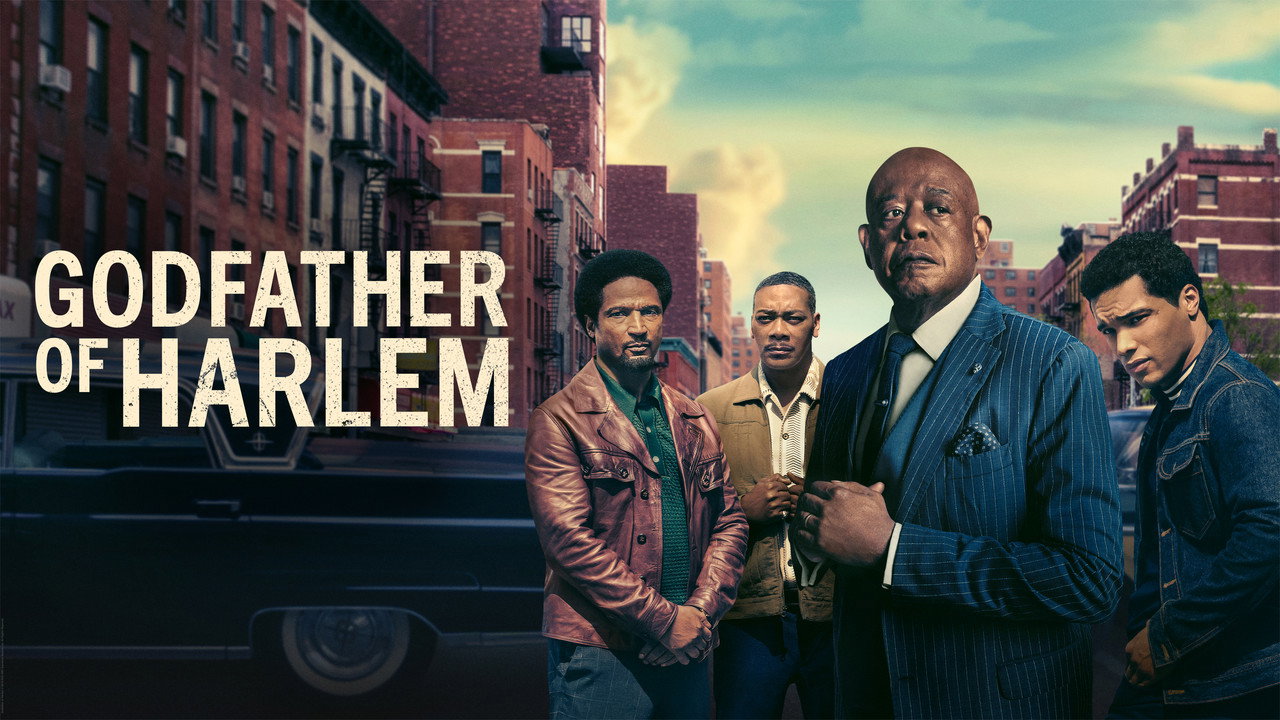
Table of Contents
A Crime Drama That Actually Had Something to Say
Here’s the thing about Godfather of Harlem that set it apart from every other gangster show: it never let you forget that Bumpy Johnson’s story was inseparable from the history of Black America in the 1960s. This wasn’t just a show about drug trafficking and territory wars. It was a show about what happens when a Black crime boss returns from a decade in prison to find his neighborhood — his entire world — transformed by forces he can’t control with a gun.
The series picks up in 1963, with Bumpy (Whitaker) walking out of Alcatraz and back into a Harlem that the Italian mob, led by Vincent “Chin” Gigante (Vincent D’Onofrio, doing the kind of coiled-intensity work that reminds you why he’s one of the best character actors alive), has carved up without him. What follows isn’t just a turf war. It’s a collision between organized crime and the civil rights movement, with Malcolm X (played brilliantly by Nigél Thatch) serving as both Bumpy’s moral compass and his most complicated relationship. That dynamic — the crime boss and the revolutionary, bound by history and pulling in opposite directions — gave the show a weight that most gangster dramas never attempt.
Season 4 took things even further. With Malcolm X assassinated, the Black Panther movement rising, and Bumpy’s daughter Elise caught in a political awakening that threatened to tear the family apart, the show pushed deeper into the question at its core: can you build power within a system designed to destroy you, or do you have to burn it down? Whitaker played every beat of that conflict with the kind of emotional precision that reminds you he’s an Oscar winner for a reason.
Why This Show Deserved More Attention
Let’s be honest: Godfather of Harlem never got the audience it deserved. Part of that is the platform problem. The show launched on Epix, a network most people couldn’t name without Googling, then rebranded to MGM+ in 2023 — another service fighting for attention in a streaming market that’s already overwhelming. If this show had launched on HBO or Netflix, we’d be talking about it in the same breath as The Wire and The Sopranos. Instead, it became one of those shows that critics rave about and the people who find it become evangelists for, but it never quite broke through to cultural saturation.
The cast alone should have been enough to draw bigger audiences. Vincent D’Onofrio. Ilfenesh Hadera as Bumpy’s wife Mayme. Antoinette Crowe-Legacy as Elise. Giancarlo Esposito in Season 3, doing what Giancarlo Esposito does. Whoopi Goldberg in a recurring role that reminded everyone she can do drama when she wants to. This wasn’t a show cutting corners on talent. MGM+ head Michael Wright once called Whitaker’s performance “an iconic, archetypal television antihero,” and he wasn’t exaggerating. Bumpy Johnson belongs in the pantheon alongside Tony Soprano, Walter White, and Omar Little — a character who makes you root for him even when you know you shouldn’t.
What the Two-Hour Finale Means
A two-hour finale is a statement. It says the creators — led by co-creator Chris Brancato — aren’t rushing to wrap things up. They’re taking the time to give the story the ending it earned. Given where Season 4 left things, with Bumpy’s empire under pressure from both law enforcement and the changing political landscape of the late 1960s, there’s a lot of ground to cover. The civil rights movement was accelerating. The old rules of organized crime were crumbling. Bumpy Johnson himself died in 1968 — a fact the show has been building toward since episode one. The finale almost certainly has to reckon with that.
The show’s strength has always been its willingness to let history drive the story rather than fight against it. Malcolm X’s assassination wasn’t a plot twist — it was an inevitability the show spent three seasons building toward. Bumpy’s fate, whatever the finale chooses to depict, will likely carry the same historical weight. The difference is that now, with two uninterrupted hours to work with, Brancato and his team can give that ending the space it needs to land.
The Crime Drama Landscape After Godfather of Harlem
Godfather of Harlem’s ending is part of a bigger shift in the crime drama space. Snowfall wrapped its run on FX. BMF is still going strong at Starz, carrying the torch for historical crime dramas centered on Black protagonists. Boardwalk Empire set the template for period crime epics a decade ago. But Godfather of Harlem did something none of those shows attempted: it made the civil rights movement itself a character in the story, not just background texture.
That’s the show’s real legacy. In a genre that often reduces history to window dressing — cool cars, sharp suits, period music — Godfather of Harlem insisted that history was the point. The drugs, the violence, the power struggles — they all existed within a larger context of systemic racism, political awakening, and a community fighting for its survival. That’s not the easy way to make a crime drama. It’s the hard way. And for four seasons, the show pulled it off.
The two-hour finale doesn’t have a date yet, but when it arrives, it’ll mark the end of one of the most underappreciated dramas of the streaming era. Bumpy Johnson’s story was never going to have a happy ending — history doesn’t work that way. But if the finale honors the show’s commitment to telling the truth about power, race, and survival in America, it’ll be exactly the ending this series earned.
© Telepisodes [EST 2008 - 2018] Disclaimer | Sitemap | About | Blog | Use of this website constitutes acceptance of Telepisodes' Terms of Service and Privacy Policy.