Watch Series Online

Evan Rachel Wood Was Recast in Practical Magic 2 Against Her Wish — And She’s Not Hiding Her Frustration
Table of Contents
Evan Rachel Wood Was Recast in Practical Magic 2 Against Her Wish — And She’s Not Hiding Her Frustration
There’s a particular kind of Hollywood heartbreak that doesn’t make the red carpet rounds or dominate awards-season chatter. It’s the kind that arrives quietly through an Instagram story, a vague-but-painful quote to a trade paper, and the sinking realization that the project you loved is moving forward without you — and the people you worked with aren’t even calling.
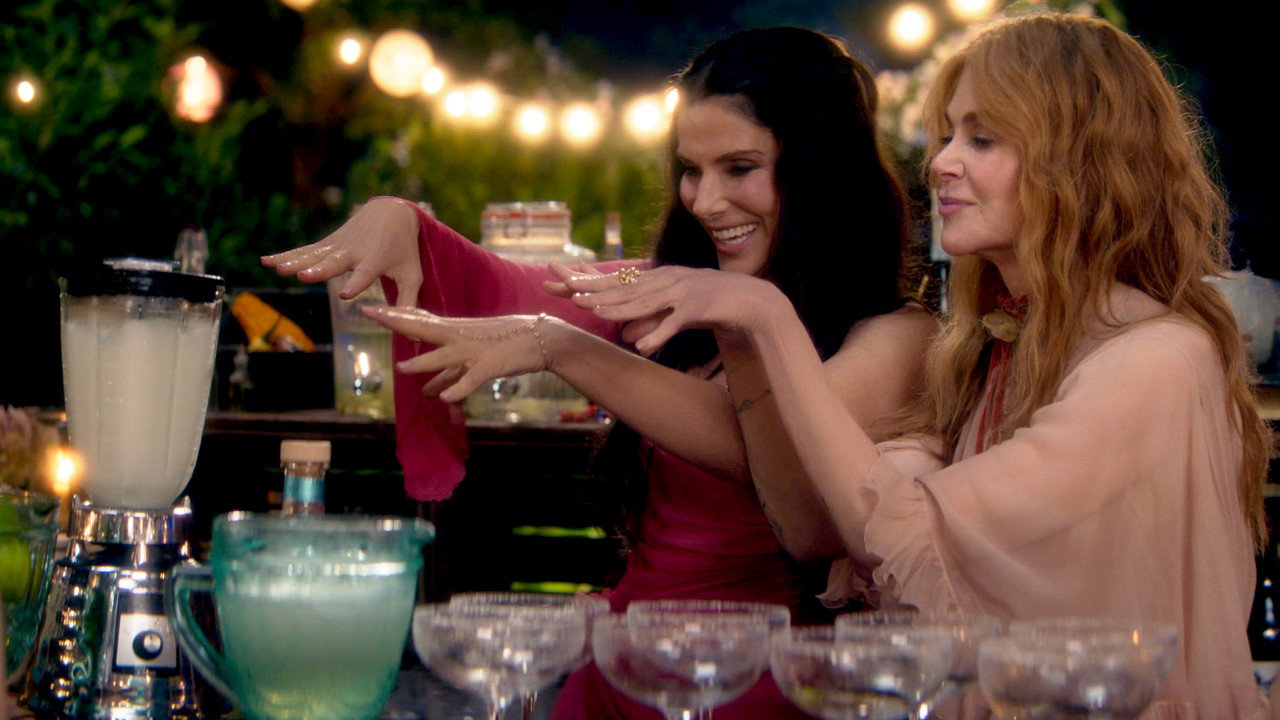
That’s where Evan Rachel Wood finds herself.
Nearly 28 years after Practical Magic introduced audiences to a goth-adjacent, candle-lit world of sisterly love and small-town suspicion, the sequel is finally happening. And Wood — who played the fragile, fiery Rebecca in the original — has been recast. Against her wishes, she says. And nobody from the original production, as far as she’s aware, bothered to reach out.
That silence is the real wound here.
The Original Still Matters More Than People Realize
Let’s be honest: Practical Magic is not a franchise in the Marvel sense. It grossed just $8.8 million on a $7 million budget in 1998. Box office darling? Not even close. But it did something franchises rarely manage — it embedded itself into a specific slice of pop culture DNA. Two generations of women who came of age in the late ’90s and early 2000s still quote it. Still reference the chandeliers, the flowers, the curse. Still feel something when they hear “This Is the New House.”
That’s the connective tissue that makes a sequel viable in the first place. Not opening-weekend numbers. Not a toy line. Twenty-eight years of word-of-mouth emotional real estate.
And into that space steps a recasting that’s already generating heat because Wood herself is talking about it. Publicly. pointedly. In an age where most actors’ PR teams put out a bland “pursuing other opportunities” statement and the news cycles on, Wood choosing to speak — and to shade her original co-stars Nicole Kidman and Sandra Bullock — is a choice that says something about how this landed.
What Wood Actually Said
The key detail isn’t just that Wood was recast. It’s the specificity of her complaint. According to her Instagram story (via Entertainment Weekly), she learned about the change the same way the public did — through the news. And her quoted line is damning in its simplicity: “No one who worked on the original film reached out to me.”
That’s not a sour grapes take about not getting the part back. It’s a professional respect issue. You don’t recast a legacy role and skip the courtesy call to the original performer — not if you value the relationship, not if you care about the franchise’s reputation for treating its actors humanely, and not if you want the original cast to feel any goodwill toward what comes next.
Bullock and Kidman, for their parts, have both been attached to the sequel. Bullock’s A24 production company is involved. Kidman is producing through her Blessed Content banner. These are the two women who, alongside Wood and Cherie Currie, anchored the original’s emotional core. And from Wood’s account, they didn’t pick up the phone.
That’s the story here — not just that a casting decision was made, but that the human infrastructure around it appears to have been bypassed.
The Practical Magic Franchise Is a Strange Beast
Hollywood loves a sequel when the math works. The Practical Magic math has never been about opening weekend. It’s about the deeper, slower kind of audience attachment — the kind that makes a film worth revisiting on a rainy Friday night at 11 PM, not the kind that sells IMAX tickets on day one.
The original film, directed by Griffin Dunne from a Susan Holloway Scott adaptation of Alice Hoffman’s novel, starred Bullock and Kidman as the Owens sisters — Gillian, the wild one with the dangerous history, and Sally, the careful one who tried to leave magic behind. Wood played Gillian’s daughter, Rebecca, caught between her mother’s trauma and her aunt’s defiant acceptance of who they were.
It’s a specific, intimate story. The kind that’s hard to replicate at scale. Which is part of what makes the recasting so sensitive — Wood’s Rebecca isn’t a supporting character who can be quietly replaced. She’s the emotional through-line of the second generation, the girl who learned too young what her mother’s past cost.
What Recasting a Role Like This Actually Signals
Casting directors and producers don’t recast roles for fun. There’s always a reason — scheduling, creative direction, chemistry reneeds, a new vision for what the character should be in this particular sequel. Sometimes those reasons are sound and boringly practical. Sometimes they reflect a creative team that has fundamentally reimagined the character.
But the execution matters. A recast handled with transparency and respect for the original performer creates a different conversation than one that lands through the gossip column. Wood’s version — no outreach, discovered through media — lands firmly in the latter camp.
And in 2026, that matters more than it might have in 2001. Actors with Wood’s profile — established, respected, aware of their own value — don’t need to take professional slights in silence the way they might have been expected to twenty years ago. The public conversation around behind-the-scenes treatment of talent has shifted. What might have been an industry footnote then is a trade headline now.
The Kidman-Bullock Dynamic Adds Another Layer
Here’s the thing that makes this specifically interesting rather than just another recasting story: Nicole Kidman and Sandra Bullock have a franchise history that goes far beyond Practical Magic. They worked together on Bird Box. They’ve been through the wringer together in Hollywood’s most public-eyed circles. They understand each other’s professional rhythms.
And yet, from Wood’s perspective, the two women who played her mother and aunt — the two women whose characters shaped her fictional childhood — didn’t reach out when the sequel moved forward without her.
That’s the kind of detail that fans and industry watchers latch onto because it suggests something about the internal dynamics of the original cast that goes beyond the film itself. It’s no longer just “Wood was recast.” It’s “the two most powerful women in the original production didn’t think to call the third.”
Whether that’s accurate or a perception shaped by whatever communications — or lack thereof — happened behind closed doors, it’s now part of the story. And it’s a harder narrative for the filmmakers to walk back than a simple casting announcement would have been.
Why This Story Resonates Beyond One Actress
There’s a reason this particular piece of Hollywood news gets traction while a dozen other casting changes disappear into the news cycle. Recasting is common. Public pushback from an actor who feels dismissed is not.
Wood’s decision to go on the record — to use her Instagram story as a platform, to be interviewed about it — signals a shift in how actors think about these moments. The old rule was: take the L, say nothing, move on to the next project. The new reality is: your professional treatment is part of your brand, your story, and your negotiating position. Silence isn’t always golden. Sometimes it’s confirmation.
That’s particularly true for actors with Wood’s profile — someone who spent years in the public eye during a turbulent period of their life, who has spoken publicly about their experiences, and who has earned the right to decide which battles are worth fighting. A recast that feels disrespectful isn’t just a professional grievance. It’s a statement about how the industry treats its actors when the cameras stop rolling.
What Happens Next
Practical Magic 2 is still happening. That much is clear from the casting announcements and the production attachments. The film is being helmed by a new creative team, with Kidman and Bullock producing and a recast lead carrying the story forward.
What’s less clear — and what makes this a story worth tracking — is whether the filmmakers can rebuild the goodwill that a perceived cold shoulder has cost them. Movie franchises don’t run on contracts. They run on relationships, on the sense among the people who made them that they’re being treated as collaborators, not replaceable parts.
Wood has already said she’d still love the opportunity to work with her original co-stars. That’s not a soft rejection — it’s an open door. Whether anyone on the production side walks through it is the next chapter of this story.
Until then, the image of a woman who played a fictional daughter in a 1998 indie about witches waiting to hear about her own professional future from the press, while the two women who played her mother and aunt stay silent — that’s the image that sticks. And In a time when every behind-the-scenes detail becomes part of the cultural record, that image matters.
The Bigger Picture for Legacy Sequels
Practical Magic 2 sits in a crowded field of legacy sequels and reboots trying to figure out what the original really was. Some — like the recent wave of Disney live-action remakes — learned the hard way that audience attachment doesn’t automatically transfer to a new cast and a new vision. Others, like the Ghostbusters: Afterlife model, succeeded by making the original cast central to the new story instead of sidelining them.
The Practical Magic sequel is somewhere in the middle — a smaller property, a more intimate story, a newer cast stepping into roles that have existing emotional weight. How it handles the recasting publicly may determine whether audiences give it the benefit of the doubt or approach it with the same skepticism they bring to any legacy project that doesn’t quite know what it wants to be.
For now, the most interesting thing about Practical Magic 2 isn’t the cast list. It’s the silence around how that list came together — and the woman who was in the original cast but wasn’t in the loop.
Related Shows and Films Worth Watching
If you’re drawn to the magical-realism-meets-family-drama energy of Practical Magic, there’s a whole ecosystem of similar stories worth your time. The Netflix witchy ensemble drama Charmed (1998) built an entire multi-season mythology around three sister witches navigating love, power, and sisterhood — in many ways the TV equivalent of what Practical Magic attempted on a smaller scale. Its 2018 reboot, Charmed (2018), took the concept in a more modern direction with a different creative team and a longer production run.
Film-wise, The Craft (1996) remains the closest tonal cousin — goth-adjacent teen witches, small-town/boarding-school isolation, and a central performance (Fairuza Balk’s Nancy) that’s become iconic in its own right. A new documentary, Finding Harry: The Craft Behind the Magic (2026), is digging into that film’s legacy right now, which says something about how durable these stories are.
For a sunnier take on the supernatural-female-lead genre, Sabrina (1995) offered a more comedic spin on the teenage-witch premise, while its TV successor Chilling Adventures of Sabrina went dark and serialized in a way that felt like a deliberate attempt to capture the goth-capitalism energy that Practical Magic touched on more gently. For younger-skewing audiences, Sabrina: Secrets of a Teenage Witch carried the same basic premise into Saturday-morning territory.
The Halloween-season supernatural comedy Hocus Pocus (1993) has enjoyed a second life through its 2022 sequel Hocus Pocus 2 — proof that legacy sequels can work when they’re attached to properties with genuine multi-generational affection behind them, something Practical Magic 2 is counting on. Across the genre spectrum, the long-running anthology American Horror Story pulled off the same balancing act between horror, melodrama, and female-led ensemble storytelling on a much larger, more ambitious scale. And for TV audiences who want their witchy soap with a suburban small-town framing, Witches of East End offered a closely related premise built around a mother-daughter duo navigating magical inheritance — a direct parallel to the Sally-and-Rebecca dynamic at the heart of the Practical Magic story.
© Telepisodes [EST 2008 - 2018] Disclaimer | Sitemap | About | Blog | Use of this website constitutes acceptance of Telepisodes' Terms of Service and Privacy Policy.