Watch Series Online

Elliot Page Isn’t Getting Casting Calls After The Odyssey — and He’s OK With That
Table of Contents
Elliot Page Isn’t Getting Casting Calls After ‘The Odyssey’ — and He’s OK With That
The phone isn’t ringing. That’s the blunt takeaway from Elliot Page’s latest interview, and it’s the kind of honesty that cuts through the usual post-film-peak noise. Fresh off a critically adored turn in Christopher Nolan’s The Odyssey — a performance that Empire called the “unexpected, unforgettable soul of the movie” — Page is telling the world exactly where things stand: no zillion calls. Not really. And that’s fine by him.
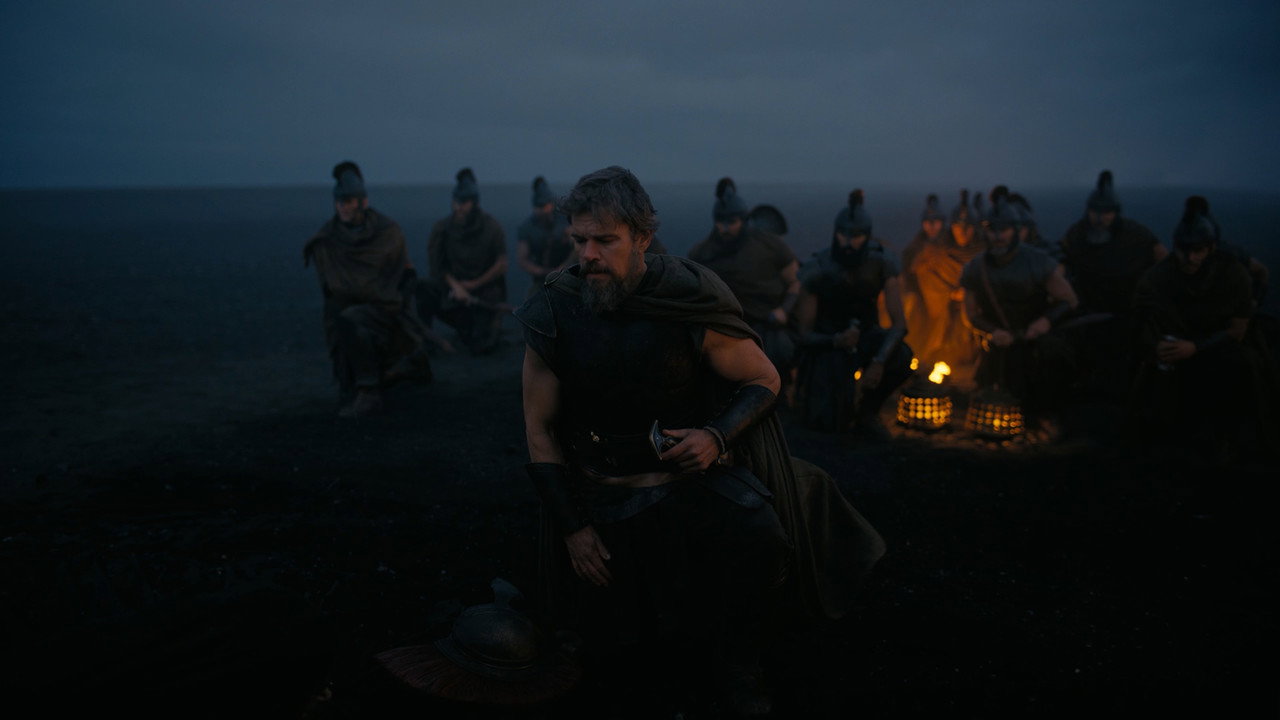
Speaking on Kevin McCarthy’s “On Film… With Kevin McCarthy” podcast, the Umbrella Academy and Inception actor laid out the post-Odyssey reality with a candor that feels rare in an industry built on managed narratives. When McCarthy floated the obvious question — surely you’re getting a zillion calls after a film this big — Page didn’t hedge.
“No, Kevin, I’m not,” he said. “So if someone wants to call me…” The remark landed with a wry shrug, the kind that makes you wonder whether the silence says more about Hollywood’s typecasting machinery than it does about Page’s bankability.
The ‘Odyssey’ Glow Didn’t Unlock the Inbox
Here’s the paradox at the center of the story: Page gave one of the most talked-about supporting turns of the summer in a $250 million Christopher Nolan epic that has already crossed $1.7 billion globally. He played Sinon, the Greek soldier whose lies about the Trojan Horse become the catalyst for the whole bloody homecoming — a small but pivotal role that critics zeroed in on. And yet the project that was supposed to be a career accelerant hasn’t translated into a flood of offers.
It’s worth noting what Page is not saying. He’s not claiming the industry blacklisted him. He’s not pretend-angry for the cameras. What he is doing is naming something actors rarely admit out loud: the gap between critical acclaim and actual inbound. A great review, a billion-dollar box office, a Cannes-to-Venice publicity circuit — none of it automatically rewires the phone tree.
That’s the real story here. Not “Elliot Page is struggling.” Rather: even a marquee supporting turn in a Nolan film doesn’t guarantee the next thing. And Page, to his credit, is articulate about why that’s an oddly liberating place to be.
“I Feel Like I Could Do Some of My Best Work Now”
The more interesting thread in the McCarthy interview isn’t the casting drought — it’s what Page says has changed internally. He revisited his experience filming Nolan’s Inception, the 2010 blockbuster where he played Ariadne opposite Leonardo DiCaprio, and drew a contrast between then and now that’s as revealing as anything in his recent work.
“I had such a great time being in Inception. I had such a great time working with [Nolan], but I was also, personally, really uncomfortable,” Page said. The implication hangs in the air: Inception was made before his public transition, before he was able to fully inhabit his own life on and off screen. Back then, the craft was there, the talent was evident, but the personal alignment wasn’t.
Now, he says, that’s shifted. “But I feel, now — because that’s removed and I don’t have to deal with that when I’m acting and my performances — I feel like I could do some of my best work now. I’m not having to literally work through a performance that I don’t even quite know that I’m doing to get to a performance.”
Read that twice. That’s an actor saying the work is finally unburdened. The performance isn’t something he has to puzzle his way through anymore — it’s something he can just do. For anyone who’s watched Page’s trajectory from Juno‘s sharp-tongued teenager to The Umbrella Academy‘s haunted vigilante to The Odyssey‘s doomed soldier, the throughline is an actor who has always been compelling on screen. The difference now is that the compellingness comes from a place of wholeness rather than complication.
And he’s “not really” getting calls. Which, depending on your read, is either a frustrating missed opportunity for the industry or proof that the work itself — the actual acting — is finally where it should be, detached from the marketplace’s feedback loop.
What’s Actually on Page’s Radar
If there’s a throughline to Page’s career choices, it’s a preference for projects that let him do something different — character actors’ roles in auteur-driven films, genre stuff that bends expectations, the occasional mainstream turn that doesn’t feel like a surrender to it. The Odyssey fits that pattern: a supporting part in a tentpole that’s nevertheless built around a director uninterested in playing it safe.
He’s already got the Nolan reunion on his résumé — Inception was one of the most incisive mid-budget-to-blockbuster pivots of its era, and the call to come back for The Odyssey, he told Josh Horowitz at New York Comic Con in 2025, “actually really just meant so much to me.” That’s not the language of a reluctant A-lister. It’s the language of someone who picks projects based on the people, not just the payday.
Beyond that, he’s got the usual constellation of credits — Juno, Hard Candy, The Umbrella Academy, Bottoms, cameos and cult favorites — and a body of work that rewards the viewer who pays attention across decades rather than across a single summer. That’s not a recipe for inbox saturation. It’s a recipe for an actor who’s interesting on screen, which is maybe the same thing.
Why the Silence Might Say More About Hollywood Than About Page
Casting is a risk-management business. Studios and producers look for the safest version of the exciting thing — the actor whose last three projects made money, whose face is on six billboards in your target demographic, whose type is legible at a glance. Page has never been that kind of actor. He’s been the kind who takes the role that requires a little latitude — Sinon in an epic, Ariadne in a mind-bender, a trans vigilante in a superhero show that shouldn’t have worked but did.
Maybe the silence is the industry waiting to see what he does next. Maybe it’s the gap between “acclaimed supporting turn” and “marquee lead.” Maybe it’s the simple, unglamorous truth that even great performances in great films don’t automatically open every door. Page seems to understand all of that. His response isn’t frustration; it’s a kind of open-handed invitation. “If someone wants to call me… I’d love to do good work.”
That’s not a plea. It’s an offer. And the subtext — the part he doesn’t have to say out loud — is that the work itself is in a better place than it’s ever been. He’s not chasing a turnaround. He’s waiting for something worth saying yes to.
For viewers, that’s an interesting place to be watching from. Page at his best has always been an actor you notice — not the kind who disappears into the blockbuster wallpaper, but the kind who leaves a mark. If the phone stays quiet long enough, the next role he does choose might end up mattering more than a dozen offers he’d take out of professional courtesy. Sometimes the actor who isn’t getting called is the one you want to watch most closely when he finally is.
Related Coverage
For more on the films and shows shaping the current entertainment landscape, check out our coverage of The Odyssey — the Nolan epic whose box office numbers keep climbing — and Inception, the 2010 film that kicked off Page’s collaboration with Nolan in the first place. If you’re tracking the larger superhero-to-auteur pipeline, our look at Deadpool & Wolverine covers the kind of genre-project mix that’s become a career strategy for actors navigating between blockbuster machinery and independent work. And for the Robert Pattinson connection — his Odyssey co-star also stars in The Batman, another film where a lead actor’s performance shifted the conversation around a major franchise.
© Telepisodes [EST 2008 - 2018] Disclaimer | Sitemap | About | Blog | Use of this website constitutes acceptance of Telepisodes' Terms of Service and Privacy Policy.