Watch Series Online

Danny Boyle’s ‘Ink’ Opens Venice With a Tabloid Origin Story That Feels Scarily Contemporary
Table of Contents
Danny Boyle’s ‘Ink’ Opens Venice With a Tabloid Origin Story That Feels Scarily Contemporary
The 83rd Venice Film Festival opened on September 3 with a film that could not have been more timely — or more uncomfortable. Ink, Danny Boyle’s dramatization of how Rupert Murdoch built The Sun from a laughingstock into a media empire, arrived on the Lido to a five-minute standing ovation and immediate critical division. The film is at once a seventies-flavored period piece about Fleet Street and a mirror held up to today’s fractured information landscape.
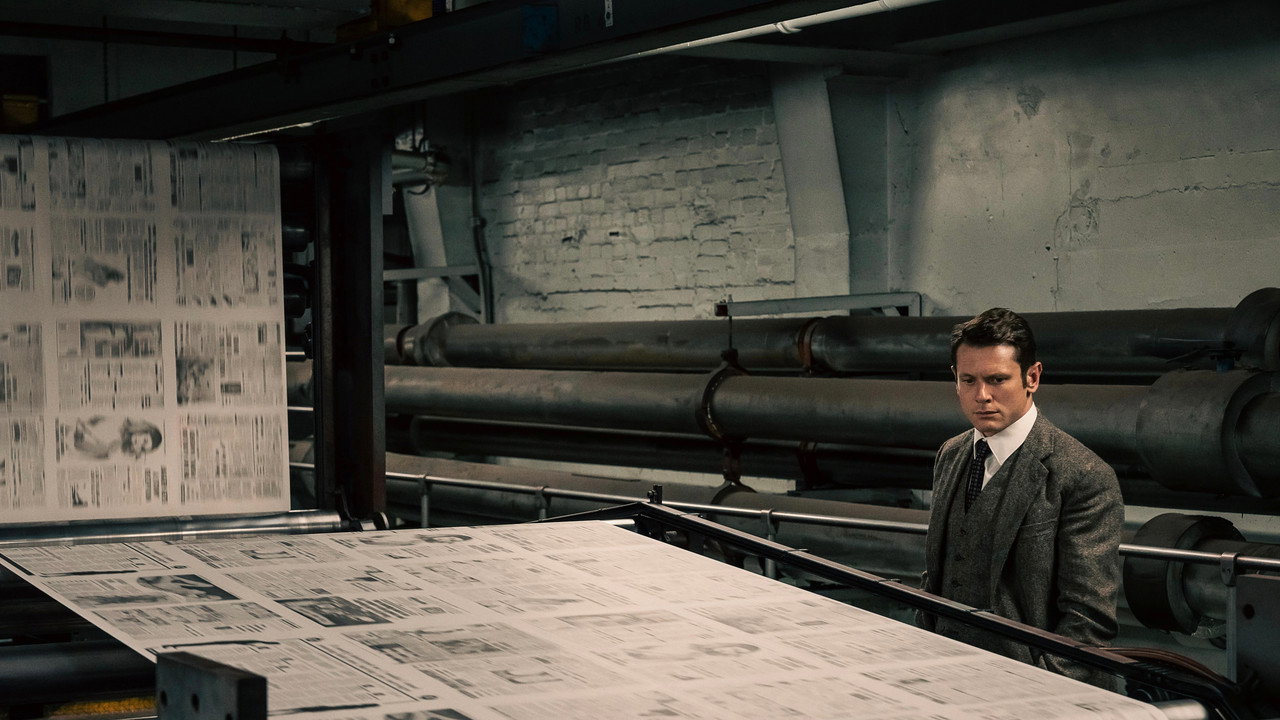
That duality is the whole point. Boyle and writer James Graham (who adapted his own Tony- and Olivier-winning 2018 stage play) are not making a conventional biopic. They are telling the story of a specific moment — 1969 London, Murdoch freshly arrived from Australia, buying a failing newspaper that the entire establishment considered a joke — and letting the audience connect the dots to the world that moment eventually produced.
Deadline’s Pete Hammond called it “a fascinating document and precursor of what was to follow, demonstrated in a stunning montage of what this snapshot in time has led us to all the way to now. Chilling.” The Hollywood Reporter’s David Rooney was more ambivalent, praising the “kinetic energy, convulsive editing and a liberal sprinkling of post-punk, electro-pop and indie rock” while noting “the impression remains that this is a morality play with an elusive point of view.” Both assessments capture something true.
The Murdoch-Lamb Partnership at the Center
The film’s engine is the partnership between Murdoch (Guy Pearce) and Larry Lamb (Jack O’Connell), the obscure Fleet Street journalist Murdoch handpicks to run The Sun. Their first meeting at the restaurant Rules — still operating in London today — is the film’s most compelling scene. Lamb lays out his editorial philosophy by expanding the classic journalism mantra. The standard five questions — who, where, when, what, and why — are only the beginning. His sixth rule: “What’s next?”
That question becomes the film’s thesis. The Sun under Lamb stops publishing news and starts publishing what comes next — the story that follows the story, the angle that keeps the presses running and the readers buying. Murder, sports, television, and, most vividly, sex. The famous topless model segment that became The Sun‘s trademark is in the film, and the scene where a furious Murdoch sees the first issue land — and then sees the numbers soar — is a priceless pivot. Pearce’s Murdoch is not yet the titan of later decades; he is a brash Australian who cannot quite believe his luck and cannot quite admit what he is building.
O’Connell, still riding the wave of his provocative turn in Sabotage (check out our coverage of Sheepdog for another look at a actor pushing into challenging territory this year), is the film’s revelation. He brings a working-class fury to Lamb that never settles into caricature. Pearce, meanwhile, plays Murdoch with a coiled restraint — the performance of a man learning, scene by scene, what his creation will become.
Boyle Finds His Rhythm Again
Danny Boyle has not always made the right call with biographical material. His 2015 Steve Jobs film, starring Michael Fassbender, was admirable but felt constrained by its realist structure. Ink is a different animal entirely. Boyle leans into the energy of the material — the period is the early seventies, the era right after the moon landing, and the film’s whip-smart visual style matches a moment when anything felt possible. The opening credits alone, using The Sun‘s signature tabloid red, announce that this will not be a staid newspaper movie.
It is worth remembering what Boyle has already done with accelerated, morally ambiguous storytelling. 28 Days Later reinvented the zombie genre by making the infected move at full sprint. Trainspotting turned Edinburgh into a bullet-time playground of petty crime and neurotransmitters. Slumdog Millionaire, his Oscar-winning breakthrough, found a kind of feral optimism in the Mumbai underworld. Ink shares DNA with all of those — the velocity, the outsider energy, the conviction that the right filmmaker can make even a story about old newspapers feel like a contact sport.
For viewers who have followed Boyle’s more recent work, The Beach and T2 Trainspotting showed a filmmaker still searching for the furious footing he had in the nineties and early two-thousands. Ink suggests he has found it again — or maybe he finally found the subject that matches the temperament. The film runs 1 hour 56 minutes and never feels long.
Claire Foy and the Women of Fleet Street
Claire Foy, fresh off her Emmy-winning turn as Queen Elizabeth in The Crown and her recent work in Women Talking, plays Jean, a rare female journalist on Fleet Street who can “get into the mud and play with the boys.” Graham has said the character is a composite rather than a single historical figure, but Foy nails a specific kind of desperation — a woman in a boys’ club who has to be twice as aggressive to be heard once. Her scenes with Lamb have a charged professional tension that adds backstory to the Lamb-Murdoch axis without slowing the narrative.
Jonathan Hyde plays David Yelland, Murdoch’s lieutenant whose wife is kidnapped in a tragic incident that becomes a turning point for Lamb’s editorial decisions. The kidnapping sequence is where the film’s moral opacity becomes most uncomfortable — Lamb must decide whether to publish a story that is devastating to a man who is also his boss and partner. The film does not resolve that tension cleanly, and that is the right call.
The Relevance That Lands Like a Punch
The genius of Ink — and the source of its discomfort — is that it cannot help itself from connecting 1969 to now. The montage near the end, tracing the line from Murdoch’s early tabloid empire to the modern media environment, lands like a punch. This is a film about the origin of a worldview — the idea that news is what people want, not what they need, and that the distinction is a luxury democracies cannot afford.
That the film arrived at Venice the same week as the Venice Film Festival’s opening ceremony — where George Clooney received a lifetime achievement award — is almost too on-the-nose. Clooney built a post-Syriana career in part around informed, morally engaged filmmaking. Boyle has always operated in a rougher register. The pairing of the two at the same festival, same week, tells you everything about the range of serious filmmaking right now.
And for audiences who have been following Boyle’s recent Venice and festival appearances — including his work on the Glass Onion follow-up universe and his production company’s slate — Ink slots into a body of work that has always been more interested in systems and pressure points than in individual heroes. The earlier film 127 Hours was, at its core, about a man trapped between his own instincts and his obligations to the people waiting for him. Ink is about a man trapped between what he wants to build and what his creation will become. The throughline is unmistakable.
What It Means for the Rest of the Festival
Ink opening Venice with a five-minute ovation tells the 2026 festival season something important: audiences are hungry for films that engage directly with the information crisis without being preachy about it. The film’s Australian and UK production team — led by producers Tessa Ross, Michael Ellenberg, and Tracey Seaward — made a picture that trusts its audience to sit with discomfort. That is a rarer skill than festival rhetoric suggests.
Netflix will release Ink in theaters on December 11, 2026, with streaming arriving January 8, 2027. The runtime and the period setting make it a contender for the holiday awards-window crowd — the kind of film that plays better on a big screen and rewards a second viewing. For festival-goers who caught it on the Lido, the immediate question is whether the warmth of that opening-night ovation survives a wider release. Given that the film’s sharpest jokes and most uncomfortable montages depend on the audience knowing exactly where the story ends up, the answer is likely yes.
If you have been following Boyle’s career from Shallow Grave through Slumdog Millionaire to Trainspotting‘s sequel and now this, Ink feels like a director finally working with the exact material his sensibility was built for — messy, ambitious, morally complicated, and impossible to look away from. The five-minute ovation in Venice was not just applause. It was recognition.
© Telepisodes [EST 2008 - 2018] Disclaimer | Sitemap | About | Blog | Use of this website constitutes acceptance of Telepisodes' Terms of Service and Privacy Policy.