Watch Series Online

Cassandra Wilson, Grammy-Winning Jazz Singer, Dies at 70
Cassandra Wilson, the Grammy-winning jazz vocalist whose deep, unhurried contralto bent blues, folk and funk into some of the most distinctive vocal records of the modern jazz era, has died at 70. Wilson’s longtime manager Robert Torre confirmed that the singer died early Wednesday morning (September 2) at her home in Jackson, Mississippi, saying in a statement that she “transitioned peacefully at home, surrounded by family, close friends, and her manager.” No cause of death was given.
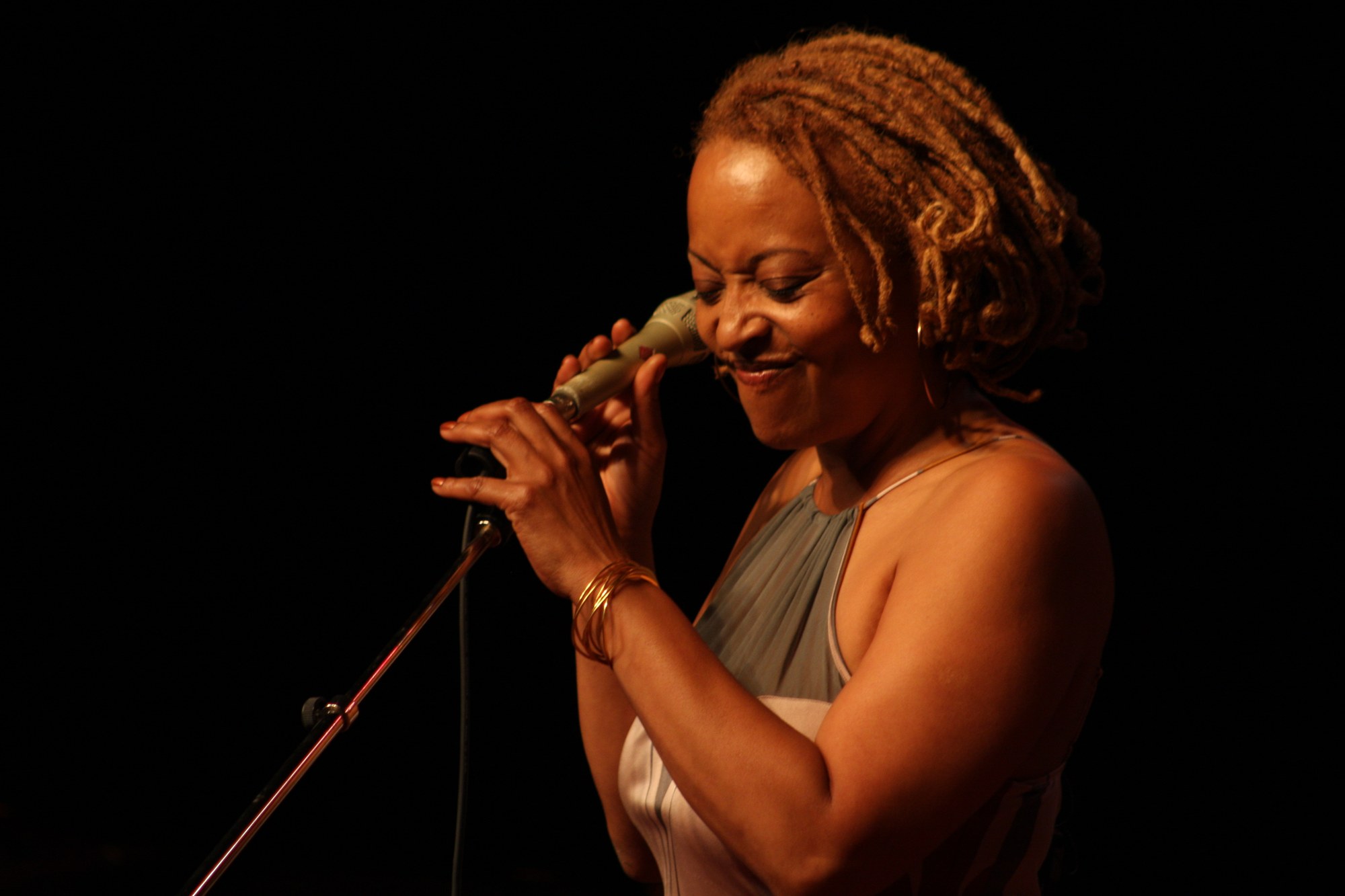

The loss closes a chapter on a singer who spent four decades proving that jazz could inhale the whole of American music and still sound like nobody else. Over the next few days the tributes will arrive, the deep-cut playlists will circulate, and the records will do the arguing for her — as they always have.
Table of Contents
A Voice You Could Pick Out of Any Crowd
Wilson’s instrument was unmistakable: a low, warm, faintly smoky contralto that she wielded with a jazz singer’s timing and a blues singer’s weight. She needed no melisma and no acrobatics. Give her a phrase from Billie Holiday’s “Strange Fruit” or Robert Johnson’s “Hellhound on My Trail” and the song quietly became hers. She could slip inside a Hank Williams lament like “I’m So Lonesome I Could Cry,” turn U2’s brooding “Love Is Blindness” into something intimate, or dust off Neil Young’s “Harvest Moon” until it sounded like a standard that had been waiting for her all along.
That gift for instant recognition is precisely what singing competitions try to manufacture. On shows like The Masked Singer, the entire game is guessing whose voice is hiding behind the costume. Wilson never needed a reveal: listeners knew her the second she opened her mouth, and the confidence in that recognition — the sense that she trusted her own ears above every genre convention — was the quiet engine of her whole career.
From Mississippi Porches to Downtown New York
Born in Jackson, Mississippi, Wilson began piano lessons at six and picked up the guitar at twelve, growing up inside the blues and gospel traditions of the Deep South. In the early 1980s she moved to New York City, where she met saxophonist Steve Coleman and helped found M-Base, a forward-thinking collective that also counted pianist Geri Allen and saxophonist Greg Osby among its members. M-Base treated jazz harmony as raw material for something harder, funkier and more modern, and Wilson’s early records — including her 1986 solo debut, Point of View — placed her squarely in that experimental downtown scene.
But she was never an easy artist to keep in one box. Even as the avant-garde claimed her, Wilson kept one foot in the blues and folk she had absorbed in Mississippi, and she sang with a warmth that the cool intellectualism around her sometimes lacked. That duality — brainy downtown improviser, deep-country storyteller — is what made her next move so surprising and, in hindsight, so inevitable.
The Blue Note Years
The pivot came in 1993, when Wilson signed with Blue Note Records and released Blue Light ‘Til Dawn, a mostly acoustic set of blues and folk songs that stripped her sound down to guitar, bass and that voice. Traditionalists grumbled that it was not jazz enough; everyone else heard a singer finally at full power. The album’s fearless run through Robert Johnson, Van Morrison and Joni Mitchell became her commercial breakthrough and earned her a Grammy nomination, even as it reshaped what a modern jazz vocal record could be.
She doubled down with 1995’s New Moon Daughter, which won the Grammy for Best Jazz Vocal Performance in 1997, and spent the rest of the decade testing the borders of her own category: Traveling Miles, her 1999 salute to Miles Davis, drew another nomination, while Belly of the Sun (2002) saw her head home to Mississippi, cutting deep into the roots music she had carried since childhood. In 2008 she returned to the songbook with Loverly, which won her a second Grammy, for Best Jazz Vocal Album.
The music business loves a story about artists who fight to sound like themselves — it is the engine of dramas like Empire — and Wilson lived that fight in real time, walking away from scenes and formulas that never fit her. She also quietly pioneered something the culture would later claim as its own: long before Glee turned the cover version into a weekly appointment, Wilson built a career on the radical idea that a jazz singer could remake pop songs and make them deeper, taking on everyone from Bob Dylan and Cyndi Lauper to the Monkees’ bubblegum classic “Last Train to Clarksville.”
‘America’s Best Singer’
The wider world caught up in 2001, when Time magazine declared Wilson “America’s Best Singer” — anointing, at the height of the pop diva era, a jazz artist who had built her following the old-fashioned way, record by record and stage by stage. The honors kept stacking up around her: DownBeat’s Female Jazz Vocalist of the Year, the Miles Davis Prize at Montreal’s jazz festival, the Mississippi Governor’s Award for Artistic Excellence in Music, a marker on the Mississippi Blues Trail, and in 2022 the National Endowment for the Arts named her an NEA Jazz Master, the country’s highest jazz honor.
She spread herself generously across genres as a collaborator, recording with Wynton Marsalis — she called her work on his epic oratorio Blood on the Fields one of the highlights of her career — as well as the Roots, Luther Vandross, Angelique Kidjo, Terrence Blanchard and Olu Dara. And she kept evolving right to the end: her final solo album, Coming Forth by Day (2015), was a hushed and gorgeous tribute to Billie Holiday, reimagining a patron saint of jazz through the eyes of a woman who had spent her life walking the same line between tradition and reinvention.
Why Her Loss Resonates
Wilson’s career is a useful reminder that jazz has never actually needed saving. It keeps resurfacing in the mainstream on its own terms — whether through a film like La La Land putting a jazz quartet at the center of a modern love story or through a singer bold enough to treat the entire American songbook as her personal property. Wilson did both: she expanded the audience for jazz without diluting it, and she never stopped sounding like the Mississippi woman who fell in love with the blues before she ever heard the word “jazz.”
When a music legend dies, audiences instinctively return to the work. It is the same impulse that keeps music-legacy documentaries like The Dolly Parton Story: From Rags to Rhinestones in circulation, and this week it will send a new generation hunting for Blue Light ‘Til Dawn and New Moon Daughter. Wilson’s catalog is deep enough to reward that pilgrimage: start with “Hellhound on My Trail,” stay for “Harvest Moon,” and let her “Strange Fruit” stop you cold. Then follow the thread from M-Base to Loverly and hear a singer who treated every genre as a door, never a cage.
Cassandra Wilson sang like the music mattered because she genuinely believed it did. In a career full of reinvention, she never once sounded like anyone but herself — which is why, even in a crowded year of music news, her voice is the one that will keep finding new listeners for decades to come.
Which Cassandra Wilson record will you be revisiting this week? Tell us in the comments.
© Telepisodes [EST 2008 - 2018] Disclaimer | Sitemap | About | Blog | Use of this website constitutes acceptance of Telepisodes' Terms of Service and Privacy Policy.