Watch Series Online

Carrie Review: Flanagan’s Bold Ending and Season 2 Odds
All eight episodes of Prime Video’s Carrie landed at once on October 7, and by the next morning the argument had already started. Not about whether Mike Flanagan’s take on Stephen King’s 1974 debut is good — most critics agree it is — but about the last ten minutes, where the showrunner does something no previous adaptation has dared to do with Carrie White.
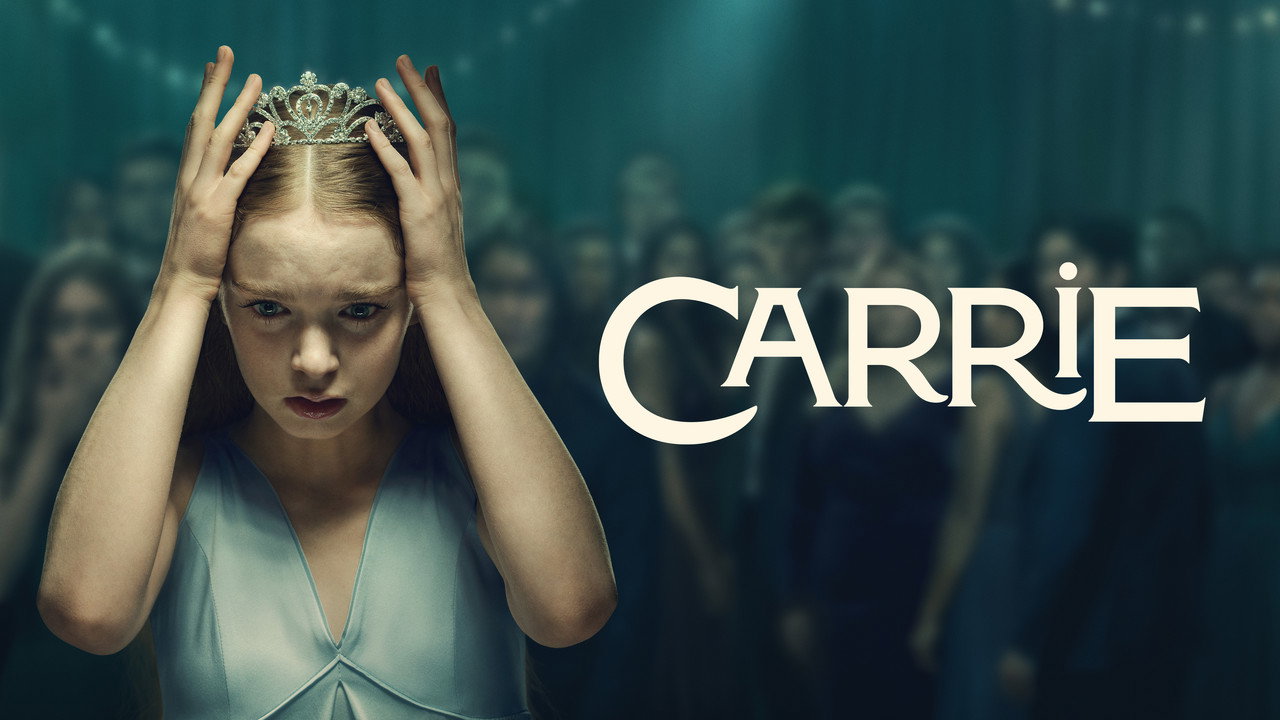
He lets her live.
Table of Contents
What Flanagan Actually Changed
If you know the novel, you know the shape of the story: a sheltered girl with telekinetic powers, a fanatically religious mother, a prom night prank with a bucket of pig’s blood, and a massacre that burns everything to the ground. Flanagan keeps the architecture and rebuilds the interior.
His Carrie White, played by Canadian actor Summer H. Howell, is not a punchline. She starts the series having spent her life shut inside her family’s home, emerging into a public high school only after her father’s sudden death. The bullying she endures is no longer just hallway cruelty — it runs through a viral scandal and the relentless machinery of social media, which Flanagan treats as the modern equivalent of the town’s casual, collective meanness.
That framing is the reason this version justifies its own existence. The 1976 Brian De Palma film and the 2013 remake both had to compress Carrie’s isolation into a couple of hours. An eight-episode run can sit inside it. The episode titles alone tell you the show is thinking in school periods — “First Period,” “Social Studies,” “Home Economics,” “AP Physics” — and the structure gives room to characters who were always furniture before.
The Finale’s Big Swing
Here is where spoilers become unavoidable, so consider yourself warned.
In King’s book and every film version, Carrie dies. Flanagan doesn’t do that. After the prom-night rampage — which he stages with real apocalyptic weight — Carrie survives her mother’s attempt to kill her, and the house comes down around both of them.
Margaret White doesn’t die at her daughter’s hands this time. Samantha Sloyan’s version of the character is humanized just enough to make her monstrousness sadder, and she’s killed instead by Adelaide, the woman running the interview footage that frames the entire season, played by Kate Siegel. Adelaide uses her own abilities to simply talk Margaret’s heart into stopping.
The bigger reveal is Emaline West. Thalia Dudek’s character has hovered at the edge of Carrie’s life all season, and the finale confirms she isn’t a projection of Carrie’s imagination but an Astral Projector — the most advanced form of the psychic ability Flanagan previously put on screen in his King adaptation Doctor Sleep. Emaline pulls Carrie out of the rubble, and the series ends with the two of them in a car, driving toward a destination Emaline deliberately refuses to name because someone might be able to read it out of her mind.
Carrie, for the first time in her life, has agency. She also has no home, no mother, and a coven of powerful strangers hunting her.
Flanagan Wants Three Seasons
Prime Video billed Carrie as an eight-episode miniseries, and as of now the streamer has announced no renewal. Flanagan, though, has been openly talking about more.
In a September interview with Collider, he said his dream scenario is three seasons — a three-step arc for Carrie, which he described as essentially a trilogy. Season 1 is discovery: a girl learning what she can do. The obvious next chapter is refinement, followed by a final test. The finale’s closing scene is built to support exactly that, trading Chamberlain, Maine for something closer to a road story.
Whether it happens is a business question, not a creative one. Flanagan is deep in a deal with Amazon that includes a multi-format franchise built on King’s The Dark Tower novels, plus a film adaptation of The Mist at Warner Bros. He also wrote the screenplay for Clayface in James Gunn’s DC Universe and had to step away from directing it because of his commitments to Carrie and The Exorcist: Martyrs. He is not short on work.
What the Reviews Say
The critical consensus is warm. Rotten Tomatoes currently has the season in the mid-80s, and the tone of the reviews is more interesting than the number.
The Los Angeles Times called Howell “exceptional throughout” and argued that the show’s real strength isn’t the prom-night carnage — it’s the quiet, one-on-one conversations about adolescent loneliness and generational divides. Other critics have praised Sloyan as the standout, and several noted that Flanagan fleshes out the side characters in ways the novel never bothered to. One dissenting take worth reading argues the modernizing sanded off Carrie’s uglier edges and, in doing so, softened the tragedy.
The number that keeps getting repeated is that this is the lowest-scoring Mike Flanagan series to date. That’s technically true, and also a strange way to frame a show sitting in the mid-80s. His bar is simply that high — this is the same filmography that includes The Haunting of Hill House, Midnight Mass, and The Fall of the House of Usher. It is Flanagan’s fourth King adaptation after Gerald’s Game, Doctor Sleep, and The Life of Chuck.
The Cast Worth Watching For
Flanagan has always run a repertory company, and Carrie is no exception. Howell carries the title role with a stillness that makes her outbursts land harder. Sloyan, a Flanagan regular from Midnight Mass, turns Margaret into something more complicated than a cartoon fanatic. Kate Siegel, Flanagan’s longtime collaborator, appears on both sides of the camera — she directed two of the middle episodes and plays Adelaide.
Two names will jump out at genre fans. Amber Midthunder, who broke out as the lead of Prey, plays the sympathetic gym teacher Rita Desjardin. Matthew Lillard, forever Shaggy to one generation and Stu Macher to another, plays Principal Henry Grayle — a nice bit of casting for anyone who remembers him from Scream or more recently Five Nights at Freddy’s.
Siena Agudong, Alison Thornton, Joel Oulette, Josie Totah, Arthur Conti, and Thalia Dudek round out a young ensemble that does the heavy lifting in the season’s middle stretch. The rest of the directing slate — Axelle Carolyn, Kyra Sedgwick, and Hiromi Kamata alongside Flanagan and Siegel — is unusually strong for a genre series.
Is It Worth Binging This Weekend?
If you’ve never read the book and don’t know the ending, watch it before someone ruins the finale for you — the twist is doing a lot of work and the show knows it. If you have read the book, the deviation is the point. Flanagan isn’t trying to out-De Palma anyone; he’s asking what happens when the most famous victim in American horror refuses to be a cautionary tale.
The whole season runs about eight hours, and it’s built for a weekend. It also sits comfortably next to the rest of the King canon already streaming — the older miniseries of The Stand, the various takes on Salem’s Lot, and the previous theatrical versions of Carrie itself, all of which are worth a rewatch once you’ve seen what Flanagan did differently.
And if Prime Video does pull the trigger on season 2, the groundwork is already laid. Carrie is on the road with a mentor she isn’t sure she can trust, being chased by people who have been watching her since before she knew she was worth watching. That’s a very different show than the one we just got. It might be a better one.
Would you want a season 2, or was this the right place to end it?
© Telepisodes [EST 2008 - 2018] Disclaimer | Sitemap | About | Blog | Use of this website constitutes acceptance of Telepisodes' Terms of Service and Privacy Policy.