Watch Series Online

‘Boyhood’ at 12: What Happened to the Boy Who Grew Up on Screen?
Table of Contents
‘Boyhood’ at 12: What Happened to the Boy Who Grew Up on Screen?
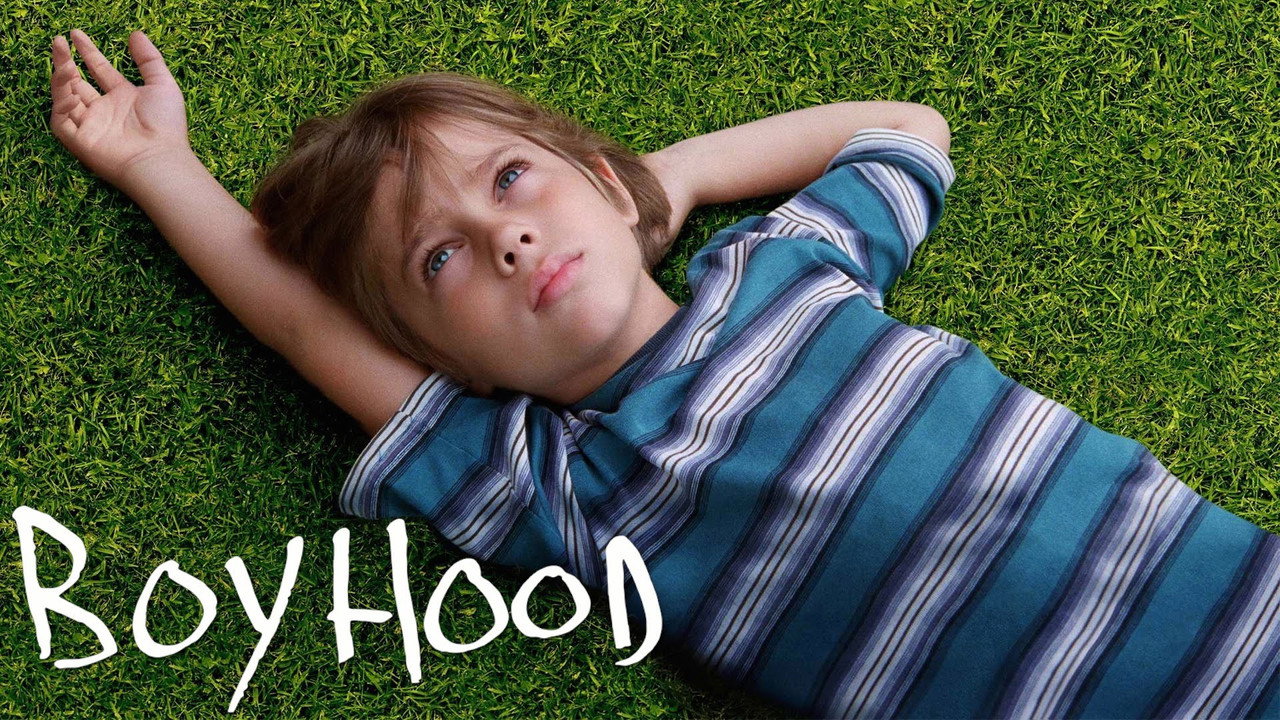
Twelve years ago, Richard Linklater released one of the strangest gambles in modern cinema: a film shot with the same cast over twelve actual years, following one fictional kid from age six to eighteen. Boyhood didn’t just become a critical sensation — it changed how Hollywood thought about time, aging and what a movie could be. Now, on the film’s anniversary, the boy at the center of it all is telling his side of the story, and the reality is a lot more grounded than the fairy tale. Ellar Coltrane, the actor who grew up on screen as Mason Evans Jr., is now 31, lives “in the middle of nowhere,” volunteers as a firefighter, and has, by his own admission, moved on.
 TMDB” class=”wp-image-0″ decoding=”async”/>
The timing makes for a fascinating retrospective. Boyhood premiered to raves in 2014 and went on to win three Golden Globes — Best Motion Picture – Drama, Best Director for Linklater and Best Supporting Actress for Patricia Arquette — before landing six Oscar nominations. Arquette took home the Academy Award for Best Supporting Actress, cementing the film’s place in awards history. But the person who carried the entire project on his shoulders has spent the years since deliberately stepping away from the spotlight. His recent interview with Variety, in which he talked candidly about growing up in front of the camera — and, memorably, about coming to set high as a teenager — is a rare and honest look at what it actually cost to make movie history.
The Experiment That Had No Playbook
Here’s what made Boyhood unprecedented: Linklater didn’t just tell a coming-of-age story, he built one in real time. Starting in 2002, he assembled a tiny cast and crew in Houston and shot a few weeks of footage every year for twelve years. Coltrane was cast at age six; by the time production wrapped, he was a grown adult who had spent more than half his life playing one character. The cast and crew aged with the story — no makeup, no CGI de-aging, no recasting. Mason’s journey through grade school, adolescence and high school is literally Coltrane’s own journey, captured year by year.
That approach was unprecedented and, at times, terrifying for everyone involved. Linklater had to trust that a six-year-old he barely knew would still want to make the movie a decade later. Coltrane had to trust that the project he signed up for as a child would actually pay off. The budget stayed lean — a reported $4 million, small even by indie standards — and the shoot happened in bursts, a few weeks at a time, wedged around school and real life. There was no guarantee any of it would cohere. As Coltrane put it in earlier interviews, telling people “it’s going to take 12 years and it’s not really about anything” usually earned him a polite “good luck with that.”
The gamble worked. Boyhood opened with one of the year’s best per-screen averages for a specialty release, earned more than $48 million worldwide against that tiny budget, and was immediately hailed as a landmark. It also gave Linklater a place alongside the Before Sunrise trilogy as a filmmaker obsessed with time — and it remains the purest expression of that obsession. Where the Before films revisited the same lovers across decades, Boyhood simply refused to let its star grow up off-screen.
Growing Up in Front of the World
The strangest part of the Boyhood experience, as Coltrane tells it, was that nobody saw the finished product until he was already an adult. Unlike child actors who become famous at eight and deal with the pressure in real time, Coltrane got to make the movie in relative obscurity. The world didn’t meet Mason until Coltrane was eighteen — and then the attention arrived all at once. He told Variety that being spared the childhood fame was probably a mercy, though even the sudden adult-level attention was “somewhat overwhelming.”
He’s also been admirably open about the messy middle of the shoot. During his teenage years, when the character was rebelling and experimenting, so was the actor — Coltrane has admitted to showing up to set high, a confession that fits the film’s ethos of radical honesty. Rather than pretending the process was a pristine art-school exercise, he owns the reality: making a movie about growing up meant actually growing up, with all the awkwardness, rebellion and bad decisions that entails. That candor is a big part of why the interview landed so well — it’s the rare retrospective that doesn’t sand off the rough edges.
The intensity of the experience left a mark. Coltrane has talked about how some of the more emotionally heavy scenes affected him in ways he didn’t recognize as a kid, and how Patricia Arquette’s instinct to keep things light between takes helped him get through the difficult material. Watching the film back as an adult, he says, is a different experience entirely — you see the craft, but you also see your own life, preserved in amber.
Where Is He Now?
So what does the boy from Boyhood do with the rest of his life? Mostly, he lives it quietly. Coltrane has appeared in a handful of indie projects over the years — including the techno-thriller The Circle alongside Emma Watson and Tom Hanks, and the young-Barack-Obama drama Barry — but he never chased the Hollywood machine. Instead, he moved somewhere remote, trained as an EMT, and became a volunteer firefighter. “I’ve moved on,” he told Variety, with a finality that reads as genuine peace rather than bitterness.
It’s a quietly subversive ending for a child star. The usual arc — child actor grows up, struggles, either flames out or claws back into the spotlight — doesn’t apply here. Coltrane walked away from the fame the industry tried to hand him and built a normal life instead. For a film about the ordinary moments that make up a life, it’s a fitting coda: the star of the ultimate coming-of-age movie decided his own coming-of-age wasn’t going to be a sequel.
Why ‘Boyhood’ Still Matters
Twelve years on, Boyhood’s influence is everywhere. The real-time gimmick has been imitated in smaller projects, and the film’s insistence on the profound weight of ordinary moments reshaped how indie cinema approached domestic drama. But it also stands alone: nothing has quite replicated the sheer logistical madness of filming one story across twelve years of a real human life. That’s partly because it required an almost insane level of trust between director and cast — the kind of trust that only comes from a filmmaker like Linklater, whose career has been one long meditation on time.
If you’ve never seen it, Boyhood rewards a first watch precisely because it refuses to be a typical movie. There’s no villain, no big climax, no tidy moral — just a kid, his divorced parents and the accumulation of small moments that add up to a life. It pairs naturally with Linklater’s other time-obsessed work, like Before Sunset and the rest of the Before trilogy, and with his looser hangout movies like Dazed and Confused, which capture the same free-floating sense of youth. Even School of Rock, as different as it is, shares that signature warmth — Linklater has always made movies about people figuring out who they are, with time as the real subject.
For Coltrane, the film’s legacy is complicated but ultimately positive. He won a Critics’ Choice Award for Best Young Performer, and the role will follow him for the rest of his life whether he wants it to or not. But he seems to have made peace with it — the way anyone makes peace with the biggest thing that ever happened to them. “Physically, it’s obviously me, and emotionally, there’s a lot of me up there,” he said years ago. “But it’s also very much a crafted character.” Twelve years later, that balance — between the real boy and the character, between the fame and the quiet life — is exactly where he’s landed.
Boyhood is streaming now on major platforms and remains one of the most rewatchable films of its era. It’s a movie about time that somehow gets better with it — and knowing where Coltrane ended up only deepens the experience. Watch it for the experiment, stay for the reminder that growing up is the one story everyone gets.
© Telepisodes [EST 2008 - 2018] Disclaimer | Sitemap | About | Blog | Use of this website constitutes acceptance of Telepisodes' Terms of Service and Privacy Policy.