Watch Series Online

Bonnie Tyler Dead at 75: Remembering the Legendary Voice Behind Total Eclipse of the Heart and Holding Out for a Hero
Table of Contents
The Welsh Singer Who Defined an Era With ‘Total Eclipse of the Heart’ and ‘Holding Out for a Hero’ Has Passed Away
The world lost a truly singular voice this week. Bonnie Tyler, the Welsh singer whose unmistakable gravelly tone powered some of the most memorable songs of the 1970s and 1980s, died Wednesday night in a Portugal hospital at the age of 75. Her family confirmed the news, stating that she passed away unexpectedly as a result of the illness she was being treated for.
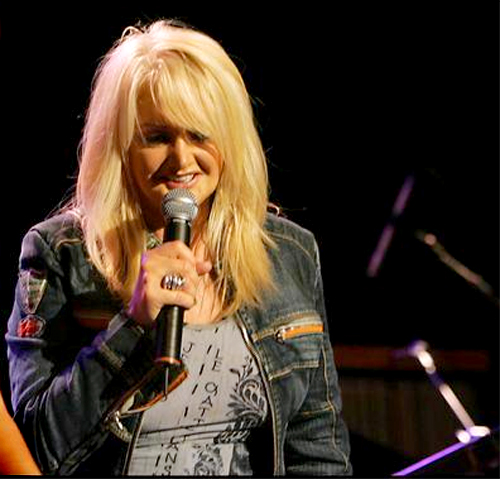

Tyler had been battling health complications for months. In May 2026, she was placed in a medically induced coma after undergoing emergency surgery for a perforated intestine. She emerged from the coma in June, and fans around the world hoped she was on the mend. Her passing has prompted an outpouring of tributes from fellow musicians, actors, and the millions of people whose lives she touched with her music.
The Voice That Almost Wasn’t
What made Bonnie Tyler extraordinary wasn’t just her vocal range — it was the texture. That raspy, powerful growl that made “Total Eclipse of the Heart” soar and “Holding Out for a Hero” hit like a freight train was actually the result of a surgical accident.
In the early 1970s, Tyler developed nodules on her vocal cords. The surgery to remove them left her with permanently thickened vocal folds, which produced the husky sound that became her trademark. What could have ended her career before it started instead gave her one of the most recognizable voices in music history. There’s a lesson in there somewhere about turning limitations into signatures.
From Wales to the World
Born Gaynor Hopkins in Skewen, Wales, Tyler got her start singing in local clubs and talent contests. Her first public performance was singing a hymn in chapel at age seven. She adopted the stage name “Bonnie Tyler” and released her debut album The World Starts Tonight in 1977. The single “It’s a Heartache” became her first international hit, reaching the Top 5 in both the UK and US.
But it was her collaboration with songwriter Jim Steinman that elevated her to legend status. Steinman, best known for his work with Meat Loaf, wrote “Total Eclipse of the Heart” for Tyler in 1983. The song became a global phenomenon, hitting number one in multiple countries and cementing Tyler’s place in pop culture history. Its dramatic music video became an MTV staple.
The following year, Steinman wrote “Holding Out for a Hero” for the Footloose soundtrack. The song became another massive hit and found a second life decades later when it was featured in Shrek 2, introducing Tyler’s music to a whole new generation. In January 2026, “Total Eclipse of the Heart” surpassed one billion streams on Spotify.
More Than Two Hits
While “Total Eclipse of the Heart” and “Holding Out for a Hero” were her biggest tracks, Tyler’s catalog runs deep. “It’s a Heartache” (1977), “Straight from the Heart” (1983), “If You Were a Woman (And I Was a Man)” (1986), and “Here She Comes” (1984) all showcased different facets of her talent. She earned three Grammy nominations and three Brit Award nominations over the course of her career, and in 2022 she was awarded an MBE for her contributions to music.
Later Career and Unexpected Relevance
Tyler never really stopped working. Through the 1990s and 2000s, she continued releasing albums and touring extensively, particularly in Europe. Her 2004 album Heart & Soul / I Believe in You found success in continental markets, and she became a beloved figure in countries like Germany, France, and Scandinavia where her brand of heartfelt rock ballads never went out of style.
The internet age was kind to her legacy. “Total Eclipse of the Heart” experienced multiple resurgences in popular culture — first through the 2008 film Thunderstruck, then via a memorable scene in The Strangers: Prey at Night (2018) that introduced the song to a new generation of horror fans. Meanwhile, the show Glee performed “Total Eclipse of the Heart” and “It’s a Heartache” to a younger audience, ensuring her music stayed in rotation for a whole new demographic. In 2017, Tyler leaned into the song’s literal meaning by performing it on a cruise ship during the total solar eclipse, a moment of perfect self-awareness that went viral for all the right reasons.
There was also the unexpected power of her music in the streaming era. “Total Eclipse of the Heart” crossed one billion streams on Spotify in January 2026, a milestone that puts her in rare company among artists of her generation. She joked about the streaming economics—noting she earned “just about nothing” from that billion streams—but took genuine pride in knowing her music was still finding new ears.
She also found surprising relevance in the internet age. “Total Eclipse of the Heart” became a recurring meme and cultural reference point, and she famously performed the song aboard a cruise ship during the 2017 solar eclipse. She had a sense of humor about her own legacy, which made her even more endearing.
A Legacy That Won’t Fade
Bonnie Tyler’s music has been there for every milestone — the power ballad at prom, the workout anthem, the karaoke night where everyone tries to hit that high note. Her songs have appeared in movies from Bandits to The Strangers: Prey at Night, and they’ll keep appearing because they’re timeless.
Tributes poured in from across the entertainment world. Kevin Bacon, Johnny Knoxville, and Rod Stewart were among those who took to social media to honor her. Each tribute highlighted a different side of Tyler — her raw vocal power, her warm personality, and her refusal to take herself too seriously despite delivering songs that felt anything but casual. Bacon called her voice “one of the greatest of rock,” a sentiment echoed by fans and fellow musicians alike. But the most fitting tribute is the music itself. “Total Eclipse of the Heart” will be playing somewhere in the world at any given moment. That’s not bad for a girl from Wales who was told her damaged vocal cords would never be an asset.
If you need me, I’ll be queueing up Faster Than the Speed of Night and singing along badly. Rest easy, Bonnie. You earned it.
© Telepisodes [EST 2008 - 2018] Disclaimer | Sitemap | About | Blog | Use of this website constitutes acceptance of Telepisodes' Terms of Service and Privacy Policy.