Watch Series Online

Sian Heder’s ‘Being Heumann’ Opens TIFF — The 28-Day Sit-In That Forged the ADA Gets Its Close-Up
Table of Contents
The Sit-In That Changed America Gets Its Close-Up
When Judy Heumann and more than a hundred disabled activists walked into the San Francisco Federal Building on April 5, 1977, they planned to stay a few days. They ended up staying 28 — the longest occupation of a federal building in American history. Apple Original Films’ Being Heumann, opening TIFF this week, tells that story, and the newly released teaser trailer makes one thing immediately clear: this isn’t a polite history lesson.
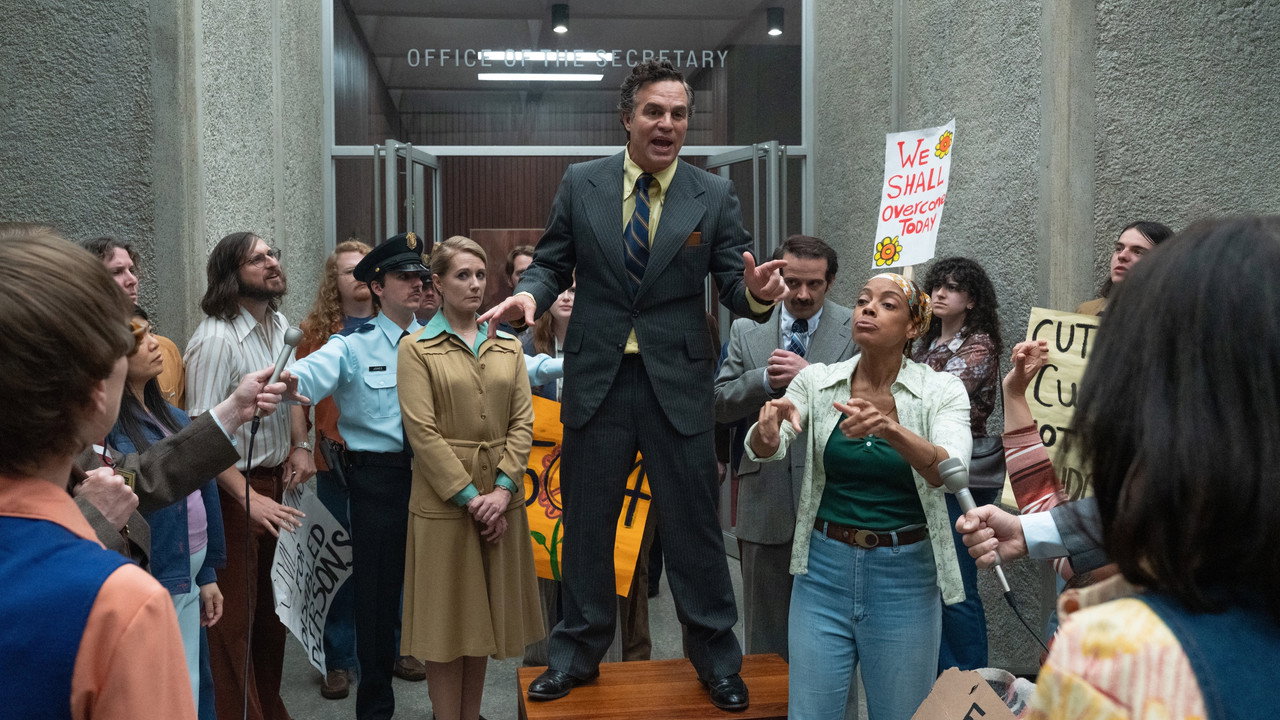
Directed by Sian Heder, the Oscar-winning filmmaker behind CODA, Being Heumann adapts Heumann’s memoir into a tightly focused look at one of the most consequential moments in disability rights history. Ruth Madeley — known to sci-fi fans as Bill Potts in Doctor Who — stars as Heumann, with Mark Ruffalo playing the bureaucrat standing in her way and Dylan O’Brien rounding out the principal cast.
The film screens at Toronto on September 10 at Roy Thomson Hall as TIFF’s opening-night selection, with a select-theatrical rollout on November 6 and an Apple TV debut on November 13. The teaser arrives at a moment when both the story and the filmmaker are hitting their stride — and it’s easy to see why Apple greenlit this one.
What the Teaser Tells Us
The 60-second cut opens on the occupied federal building — protesters camped inside, signs taped to the walls, a community holding its ground. Heumann’s presence carries through every frame: organizer, negotiator, relentless. The archival-quality framing suggests a docudrama approach, less glossy biopic, more movement-history film.
What the teaser withholds is just as telling. We don’t see the full activist coalition, the cross-disability solidarity, or the presidential-level negotiations that defined the Section 504 sit-in. But the preview lands on a clear promise: this is a story about what happens when a group of people who have been told to wait decide they’re done waiting.
That framing distinguishes Being Heumann from the standard inspirational-disability narrative. Heder’s CODA succeeded because it treated its deaf characters as full people with full lives, not as objects of pity or inspiration. The trailer hints she’s applying the same philosophy here — disability not as tragedy, not as triumph-over-adversity wallpaper, but as a lived political reality.
Why 1977 Matters More Than the Movie Alone
Section 504 of the Rehabilitation Act of 1973 was supposed to prohibit discrimination against people with disabilities in federally funded programs. It sat unsigned and unimplemented for four years because the government kept finding reasons to delay. By 1977, Heumann and other activists had had enough.
The San Francisco occupation became the centerpiece of a nationwide protest movement. Disabled people set up beds, cooked meals, held classes inside the federal building, and refused to leave until the regulations were signed. The sit-in ended when the government finally signed the regulations — the first federal civil rights protections for disabled people in American history.
Without Section 504, there is no Americans with Disabilities Act. The logic is direct: the 1977 sit-in forced the government to honor its own 1973 law, and that precedent became the backbone of the ADA a decade later. Every ramp, every closed-caption mandate, every workplace accommodation trace back to the people in that building.
Heder clearly understood the stakes when she signed on. Being Heumann isn’t just a biopic about one advocate — it’s a record of the community that made the change possible. That distinction matters, especially for a streaming-era audience that’s seen disability stories flattened into Motivation™ content too many times.
Heder After CODA: Same Instincts, Different Subject
CODA won Best Picture at the 94th Academy Awards, making Heder the first woman of color to win the directing Oscar and giving the film a box-office tail that kept it in theaters well into 2022. The win put Heder in an unusual position: a filmmaker whose breakthrough came from a small, character-driven story suddenly carrying the weight of the industry’s diversity conversation.
She didn’t head straight into a bigger studio project. Instead, she took the Apple deal for Being Heumann — a story with genuine stakes, real people, and a historical record behind it. That’s the move of a filmmaker who understood what made CODA work and chose a subject with the same integrity.
The parallel to The Theory of Everything is useful here — another Oscar-winning film about a person whose body became a battleground, told with restraint rather than sentimentality. But where that film centered a single genius, Being Heumann is fundamentally a group story. Heumann’s memoir and the documentary record both make clear: the Section 504 victory belonged to the people in the building, not just the woman at the microphone.
That’s the throughline Heder seems to be chasing — the collective voice, not the solo hero. If the full trailer or the TIFF screening confirms it, Being Heumann could be the rare political biopic that understands its own subject matter well enough to resist the easy version.
The Feature Documentary Landscape It’s Entering
Being Heumann arrives alongside a busy fall festival season that’s already produced strong disability-adjacent work. TIFF’s own opening night that same evening includes Prima Facie, with Cynthia Erivo in the National Theatre Live production — a play about a young barrister whose courtroom fight collides with how the system hears (and doesn’t hear) women. Two opening-night films in one festival, both built around who gets to speak and who gets dismissed, is not a coincidence.
The broader context matters too. The past few years have seen a real wave of disability-led storytelling — series and films written, directed, and starred in by disabled creatives rather than about them. Being Heumann joins that conversation from a specific angle: a historical story told with modern editorial instincts. If it lands right, it becomes a reference point for how to adapt movement history without sanding off the rough edges.
The November 6 theatrical date gives Apple a fall awards-season posture — a limited run, early critical screenings, the kind of rollout that builds Oscar narrative without requiring a wide release. But the real test is whether the film makes the story feel present rather than archival. Disability rights aren’t a period piece. They’re current, contested, and still being written.
Why This One Deserves Your Attention
Streaming has a way of burying the good stuff under the volume of everything else. A film about a 28-day sit-in at a federal building in 1977 doesn’t scream “event movie.” But Being Heumann has the markers of something worth watching: a filmmaker with a demonstrated record of treating marginalized characters as full humans, a true story with clear stakes and documented history, and a lead performance from an actor — Ruth Madeley — who has spent her career choosing roles that push against the limited options usually offered to disabled performers.
The teaser is a start. The TIFF premiere on September 10 will tell us whether Heder pulled the full story off. If the buzz from Toronto is anything like the CODA groundswell, this could be the kind of film that finds its audience slowly and then all at once — the way the best stories about overlooked movements tend to do.
© Telepisodes [EST 2008 - 2018] Disclaimer | Sitemap | About | Blog | Use of this website constitutes acceptance of Telepisodes' Terms of Service and Privacy Policy.