Watch Series Online

Being Heumann Opens TIFF 2026: Inside the 1977 Sit-In That Changed Disability Rights
Table of Contents
Siân Heder Opens TIFF 2026 With a 1977 Sit-In That Changed Everything
There is a moment very early in Being Heumann that tells you exactly what kind of movie Siân Heder has made. Judy Heumann, played with ferocious wit by Ruth Madeley, rolls her wheelchair up to a New York curb with no ramp. The camera holds. Then Judy gives the sidewalk—and the assumption written into so much of the built world—the middle finger. In that one irreverent gesture, Heder signals that this is not going to be a polite, teary biopic about a saintly disabled activist. It is going to be a rude, funny, human story about people who figured out that the system, not them, was broken.
The film made its world premiere on the opening night of the 51st Toronto International Film Festival at Roy Thomson Hall on September 10, instantly becoming one of the most talked-about titles of the fall season—and Apple’s next major awards bet. It opens Being Heumann in select theaters on November 6 before it lands globally on Apple TV+ on November 13. Whether it wins Oscars or not, it has already done something rare: it put the disability rights movement at the center of a studio campaign, built around a predominantly disabled cast telling their own story, rather than one sympathetic performance parked in an issue movie.
Who Was Judy Heumann?
If the name is new to you, that is precisely the point of the film. Judy Heumann contracted polio at eighteen months old in Brooklyn, and she spent her life refusing to let other people decide what she was capable of. She became the first wheelchair user to work as a teacher in New York, fighting a licensing board that initially deemed her a fire hazard. She went on to spend the 1970s at the center of a disability rights movement that most general audiences have never seen dramatized on screen—until now.
Heumann’s story is the kind that anchors so much of what we watch today. She worked in President Bill Clinton’s administration as Assistant Secretary for the Office of Special Education and Rehabilitative Services, and in 2010 President Barack Obama appointed her the first Special Advisor for International Disability Rights at the U.S. State Department, a role she held until 2017. She died in March 2023 at the age of seventy-five, but her influence lives on in legislation, in activism, and now in a major studio film named for her.
The 28-Day Sit-In That Paved the Way for the ADA
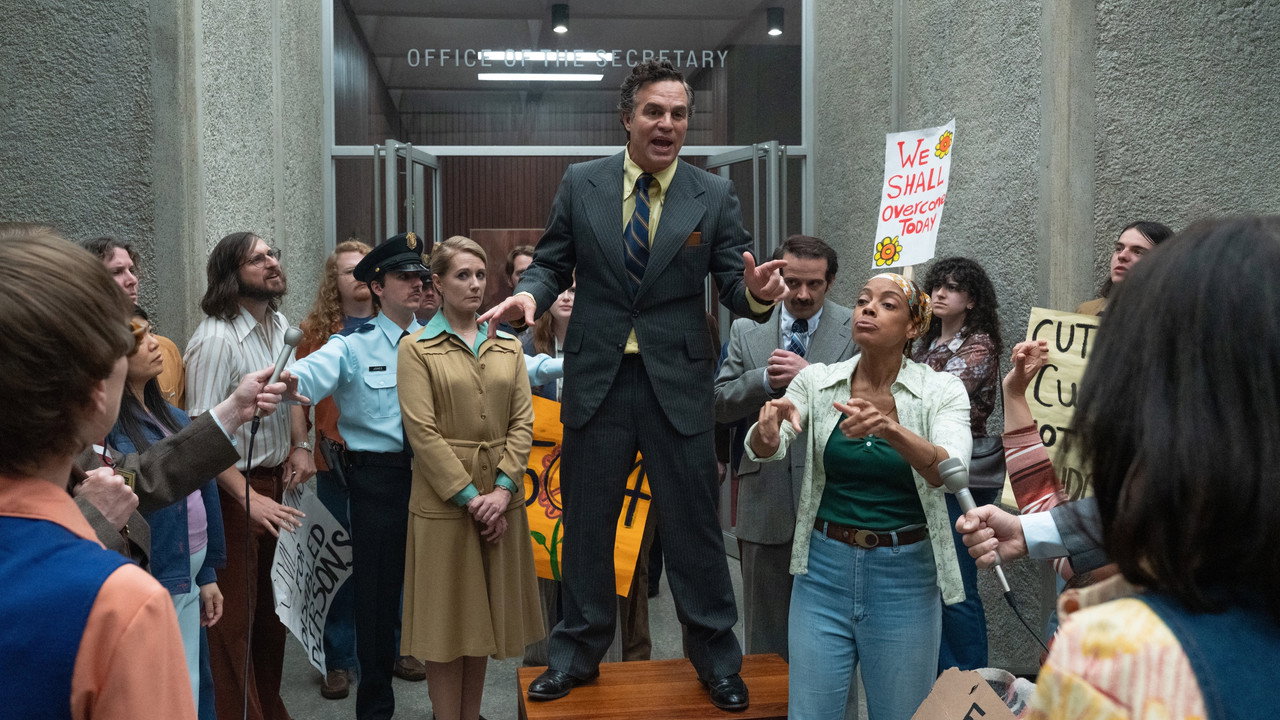
At the heart of Being Heumann is one of the most dramatic chapters in modern American civil rights history: the 1977 occupation of the San Francisco Federal Building. Heumann and more than a hundred activists seized government offices to demand that the federal government actually enforce Section 504 of the Rehabilitation Act of 1973—a provision that says no program receiving federal funding can discriminate against a person with a disability. For years, the rules had simply not been implemented.
What began as an impulsive act became the longest nonviolent occupation of a federal building in American history, stretching twenty-eight days as hundreds of protesters held the building and refused to leave. It was an audacious, exhausting, often hilarious campaign that eventually forced the issue into law. The fight is widely credited with helping pave the way for the Americans with Disabilities Act a little over a decade later.
Heder treats the material less as a single biography than as a portrait of a collective finding its voice. Mark Ruffalo plays Joseph A. Califano Jr., the U.S. Secretary of Health, Education, and Welfare who was the bureaucrat standing in their way; Dylan O’Brien, Rob Delaney, Ray Fisher, and a large ensemble of predominantly disabled actors fill out the movement. It shares DNA with a film like Then Barbara Met Alan, another fierce drama about actual British disability activists fighting for change—and with the wider genre of protest stories that Heder clearly loves.
Why This Is Heder’s Boldest Move Yet
To understand what Being Heumann means for the director, you have to go back to CODA. Heder gave the film its breakout moment when it premiered at Sundance, and it eventually made history as the first movie with a predominantly deaf cast to win the Best Picture Oscar at the 2022 ceremony. It was also a landmark win for a streamer: the first Best Picture for both Apple Original Films and any streaming company. Heder took home the Best Adapted Screenplay award that same night. Now she has reunions with the same Apple team to mount what is effectively her follow-up—and she has made the risky, principled choice to build it around disabled-led storytelling rather than lean on a more conventional star vehicle.
Critics who saw the Toronto premiere have singled out Madeley’s performance in particular. Here is a character who is funny, tactical, romantic, furious, and occasionally a bit of an asshole in the most endearing way—not the patient martyr that biopics tend to hand disabled subjects. Madeley, a British actor and Doctor Who alum who lives with spina bifida and was a BAFTA nominee for Don’t Take My Baby, brings a wheeling, unblinking energy to the role. She is the whole ballgame, and the film is far stronger for it.
The Oscars Strategy Behind TIFF
The Toronto opening is no accident. TIFF’s opening-night gala has become a launchpad that studios use to convert quiet dramas into season-long campaigns, and Apple is treating Being Heumann as a serious contender. Heder is only the fourth woman ever to direct a TIFF opening-night film—following Sally El Hosaini, Deepa Mehta, and Patricia Rozema—a stat the festival’s own programming notes seemed reluctant to foreground, preferring to lead with the subject matter itself.
That instinct is right. The film’s power is not timing or stats; it is the refusal to sentimentalize. It shows disabled characters as full romantic and sexual beings, including an intimate scene played for tenderness and desire rather than as a lesson. It insists that the disability rights movement was never just about ramps and regulations—it was always about being seen as fully human, wanted, and worthy of the same world as everyone else.
When and Where To Watch
Being Heumann will be released in select theaters on November 6, 2026, and will premiere globally on Apple TV+ on November 13. If you want to see what the fall awards season is setting up, or you simply want a true, moving, occasionally hilarious story about ordinary people pulling off the impossible, keep this one on your radar. If you enjoyed Heder’s previous work, you will want to revisit CODA to see how far she has come. And if a story about a determined crew seizing a building to change millions of lives sounds intriguing, this is about as good as it gets.
Whether Judy Heumann’s story becomes the Oscars magnet Apple is hoping for or simply the remarkable film that introduced a generation to a pioneer—it is one of the most essential titles of the year. Sometimes the best thing you can do is tune in, and then listen to the people who never stopped fighting to be heard.
© Telepisodes [EST 2008 - 2018] Disclaimer | Sitemap | About | Blog | Use of this website constitutes acceptance of Telepisodes' Terms of Service and Privacy Policy.