Watch Series Online

AI and the Rise of the Universal Entertainment App — How Spotify, Netflix, YouTube, and TikTok Are All Converging
Table of Contents
When Every App Wants to Be Your Everything
Open your phone right now. How many entertainment apps do you have? Spotify for music, Netflix for shows, YouTube for videos, maybe TikTok for short clips, and a podcast app for long-form audio. Now imagine all of that — music, video, podcasts, games, live events, even shopping — living inside a single app. That’s not a hypothetical future scenario. It’s happening right now, and AI is the engine driving the convergence.
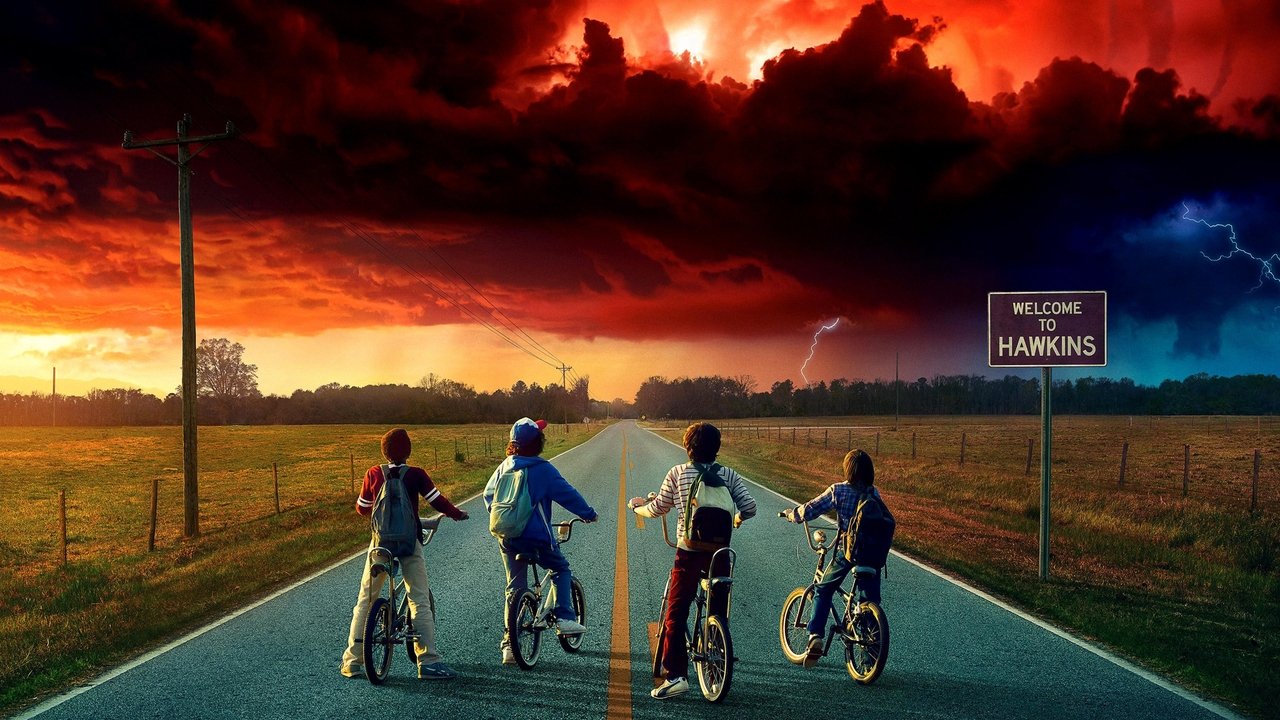
A recent in-depth analysis from TechCrunch’s Sarah Perez lays out the case clearly: over the past decade, streaming platforms competed by dominating individual formats. Spotify owned music. Netflix owned premium video. YouTube owned creator content. TikTok owned short-form. But as growth has slowed and markets have matured, the battle has shifted. These companies are no longer fighting over who has the best music library or the best original series. They’re fighting over something bigger — becoming the app you default to whenever you have time to kill, regardless of what form that entertainment takes.
AI as the Great Unifier
The key enabler of this convergence is artificial intelligence. AI makes it feasible for a single company to build, operate, and optimize multiple content formats simultaneously. Without AI, managing recommendation systems across music, video, podcasts, and games would require separate teams, separate algorithms, and separate infrastructure. With AI, a unified model can learn from user behavior across all formats and serve up whatever hits the spot at any given moment.
Spotify is testing a tool that lets users edit their “Taste Profile” — an AI-built model of their preferences that powers personalized recommendations across music, podcasts, and audiobooks. The company has also expanded into fitness content, narrated magazine articles, and even physical book sales. What started as a music streaming app is gradually transforming into a full-spectrum entertainment hub, and AI is what makes that expansion manageable.
Netflix, meanwhile, has been equally aggressive. The company behind hits like Stranger Things and Squid Game has been investing heavily in AI-driven personalization. Co-CEO Greg Peters recently told investors that new AI model architectures are improving personalization across the platform and letting the team iterate faster. Beyond recommendations, Netflix has expanded into gaming, live sports, short-form video clips, and podcasts. The company’s recent $587 million acquisition of Ben Affleck’s AI filmmaking startup InterPositive signals that Netflix believes generative AI will be central to content creation as well as content curation.
YouTube has gone even further. Under Alphabet CEO Sundar Pichai’s direction, AI is now central to every layer of the YouTube experience — from blockbuster series like The Bear to creator-driven content — from creator tools like Dream Screen (generative AI video backgrounds) to AI-powered search that delivers guided answers instead of raw results. YouTube has also rolled out AI playlist generators, auto-dubbing for multilingual reach, and conversational AI features that let users ask questions about video content. Over a million channels now use YouTube’s AI creation tools, and 20 million consumers used its Gemini-powered content discovery tool in December alone.
TikTok rounds out the picture with its own AI ecosystem: an in-app AI chatbot called Tako, AI video creation tools like TikTok AI Alive, AI-driven search and recommendation systems, and AI-powered accessibility features. The platform has expanded well beyond short-form video into long-form content, travel planning, shopping, ticket sales for live events, and even a separate app for microdramas.
The End of Format Wars
For the past decade, the entertainment industry’s defining narrative was the format war: music streaming vs. downloads, cable vs. streaming, short-form vs. long-form. Each platform carved out a niche by being the best at one thing. But those lines are dissolving fast.
The data backs this up. Streaming growth has slowed across the board — the gold rush of new subscribers is over in most mature markets. Companies are now competing on time spent and revenue per user rather than new sign-ups. The most efficient way to increase both? Offer more reasons to stay inside the app. If a user can listen to music, watch a show like House of the Dragon, play a quick game, and buy event tickets all within Spotify or Netflix or YouTube, they have fewer reasons to open a different app — and the platform captures more of their attention and more of their wallet.
AI supercharges this dynamic. Better recommendations mean users discover content faster, which means they engage longer. Generative AI means platforms can create new content categories (AI-generated backgrounds, personalized playlists, auto-dubbed versions) that would have been prohibitively expensive to produce manually. The result is a flywheel: more content formats attract more users, more user data improves AI models, better AI models create better experiences, and better experiences increase engagement.
What This Means for TV and Streaming
For the average viewer, this convergence has real consequences. The most immediate is the blurring of identity: is Netflix a “TV app” or a “gaming app” or a “social app”? The answer is increasingly yes to all three. Netflix’s push into short-form video — with deals bringing publisher content from Variety and others onto the platform — signals that the company wants to compete even for the five-minute gaps in your day that TikTok currently fills.
It also means that the traditional distinction between “watching TV” and “scrolling social media” is going to get harder to maintain. When YouTube serves both hours-long documentaries and 30-second Shorts, and when Netflix mixes feature films with vertical video feeds, the line between “lean back” and “lean in” entertainment blurs. That’s not necessarily a bad thing — it gives viewers more choice and more flexibility in how they consume content. But it does change the competitive dynamics in ways that traditional TV networks and studios are still grappling with.
The losers in this convergence could be the single-purpose apps. Standalone podcast apps, dedicated music players, and niche video services may find it increasingly hard to compete with platforms that offer an all-you-can-eat buffet of entertainment options fueled by AI-driven discovery. The winners are the platforms that manage the transition best — and the consumers who get more seamless, personalized entertainment experiences as a result.
The Dark Side: Lock-In and Data Concerns
Of course, there’s a less rosy interpretation of this trend. As entertainment platforms converge, they gain more data on user habits across more dimensions of behavior. A single app that knows what music you listen to, what shows you binge, what games you play, and what events you attend has an incredibly detailed picture of your life. That data advantage becomes a powerful lock-in mechanism — the more an app knows about you, the harder it is to leave, even if prices climb or quality drops.
AI-powered personalization also raises questions about filter bubbles in entertainment. If an AI learns that you prefer action movies, crime podcasts, and upbeat music, it may stop surfacing anything outside those preferences — narrowing your cultural horizons in the name of engagement optimization. Platforms have an incentive to keep you watching, not to challenge your tastes, and AI algorithms optimized for time-spent may inadvertently create echo chambers of entertainment.
Regulators are starting to take notice. The same data advantage that makes these converged platforms so compelling is also drawing scrutiny from antitrust authorities. If one platform comes to dominate too many entertainment formats, it could face the same kind of regulatory pressure that Big Tech companies have been navigating in other sectors.
The Bottom Line
The universal entertainment app isn’t a distant ambition — it’s already taking shape across Spotify, Netflix, YouTube, and TikTok. AI is the engine powering this transformation, making it feasible for a single platform to serve music, video, podcasts, games, and more with seamless personalization. Whether you’re watching Alice in Borderland on Netflix or listening to a podcast on Spotify, the experience is increasingly powered by the same underlying AI models. For consumers, the result is more choice, more convenience, and more personalized recommendations. But it also means handing more data and attention to a shrinking number of platforms. The next phase of the streaming wars won’t be about who has the best content library. It will be about who builds the best operating system for your free time — and how much of your entertainment life you’re willing to let it absorb.
© Telepisodes [EST 2008 - 2018] Disclaimer | Sitemap | About | Blog | Use of this website constitutes acceptance of Telepisodes' Terms of Service and Privacy Policy.